
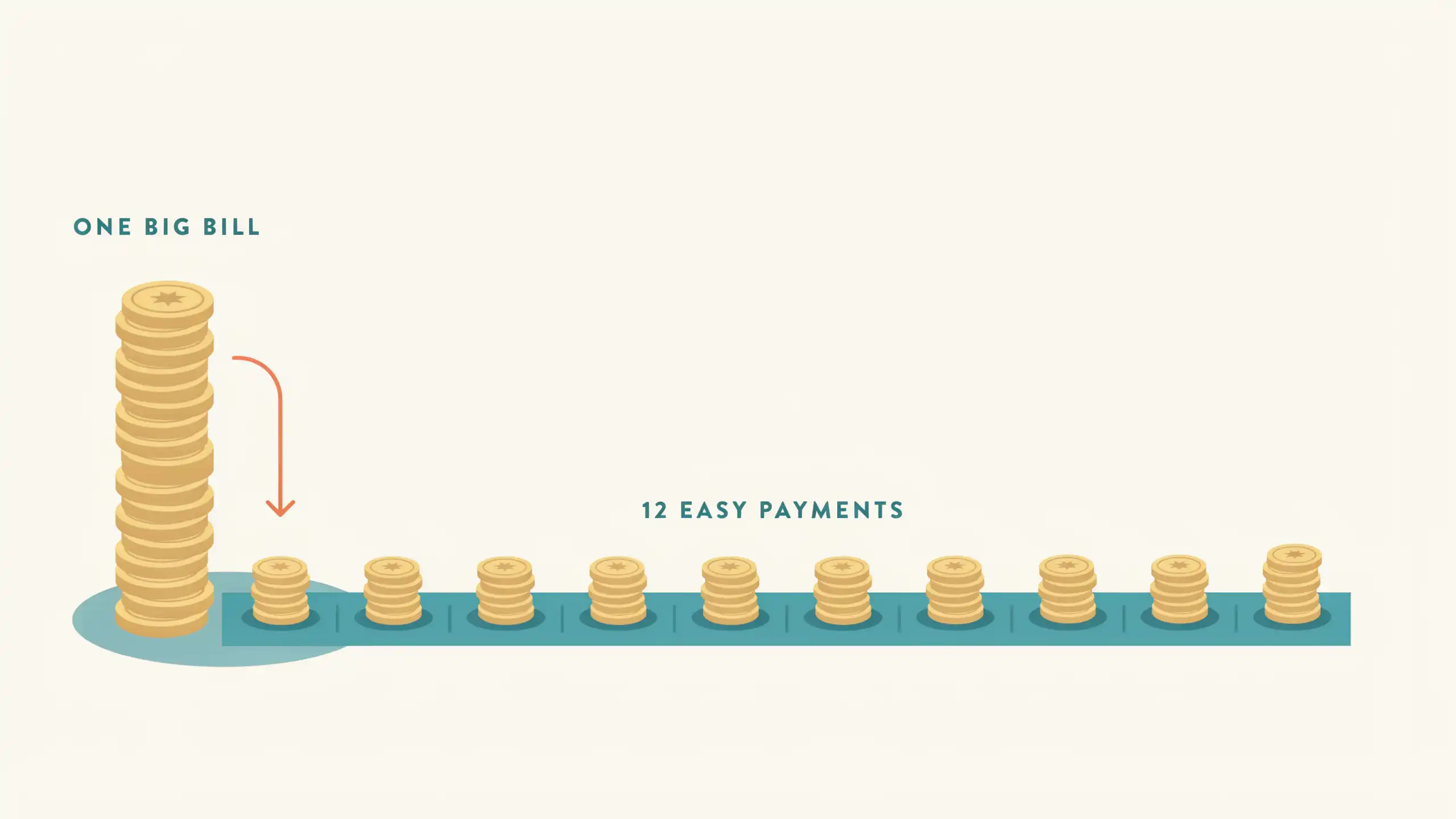

Your car insurance premium and holiday gift list aren’t surprises, but they still wreck a monthly budget because they land all at once. Give each predictable bill its own sinking fund. Divide the cost by the months left until it’s due, and automatically move that amount into a separate savings account each month.
Without a sinking fund, you pay those bills from whatever happens to be in checking that week. When two land in the same month, one goes on a credit card or comes out of your emergency fund.
Neither outcome is necessary, because none of these bills is an emergency. You know roughly what each one costs and when it’s due. The only problem is timing, since several months’ worth of an expense arrives as one bill.
That difference decides where the money should come from. An emergency fund is for the costs you can’t see coming, like a layoff or a hospital bill. Every registration renewal you pay from it leaves less there when a real emergency hits.
Start with the last 12 months of bank and credit card statements. List every charge that didn’t come monthly, including costs with no bill attached that still arrive on a rough schedule, like new tires or the dog’s annual checkup.
Then size each fund by the months left, not by 12. Say a $1,200 annual premium is due in four months. Setting aside $100 a month would leave you $800 short on the due date. Setting aside $300 a month covers it, and once you pay it, next year’s premium needs only $100 a month.
Keep the money out of checking so you don’t spend it by accident. Ally lets you divide one savings account into as many as 30 buckets while the whole balance earns interest, and Capital One lets you open a separate 360 Performance Savings account for each goal. Schedule every transfer for payday.
When a bill comes due, pay it from its fund and restart the transfers for the next one. If you can name an expense and roughly when it’s coming, it belongs in a sinking fund, not your emergency fund.

Editorial & Advertiser Disclosure: The editorial content on this page is not provided, commissioned, reviewed, approved, or otherwise endorsed by any advertiser. Opinions expressed here are ours alone, not those of any advertiser. The offers that appear on this site are from companies that compensate us. That compensation may influence which products we cover and where and how they appear on a page – including the order in which they appear – but it does not influence our evaluations, ratings, or opinions. We do not include every company or offer available in the marketplace.
Related: