

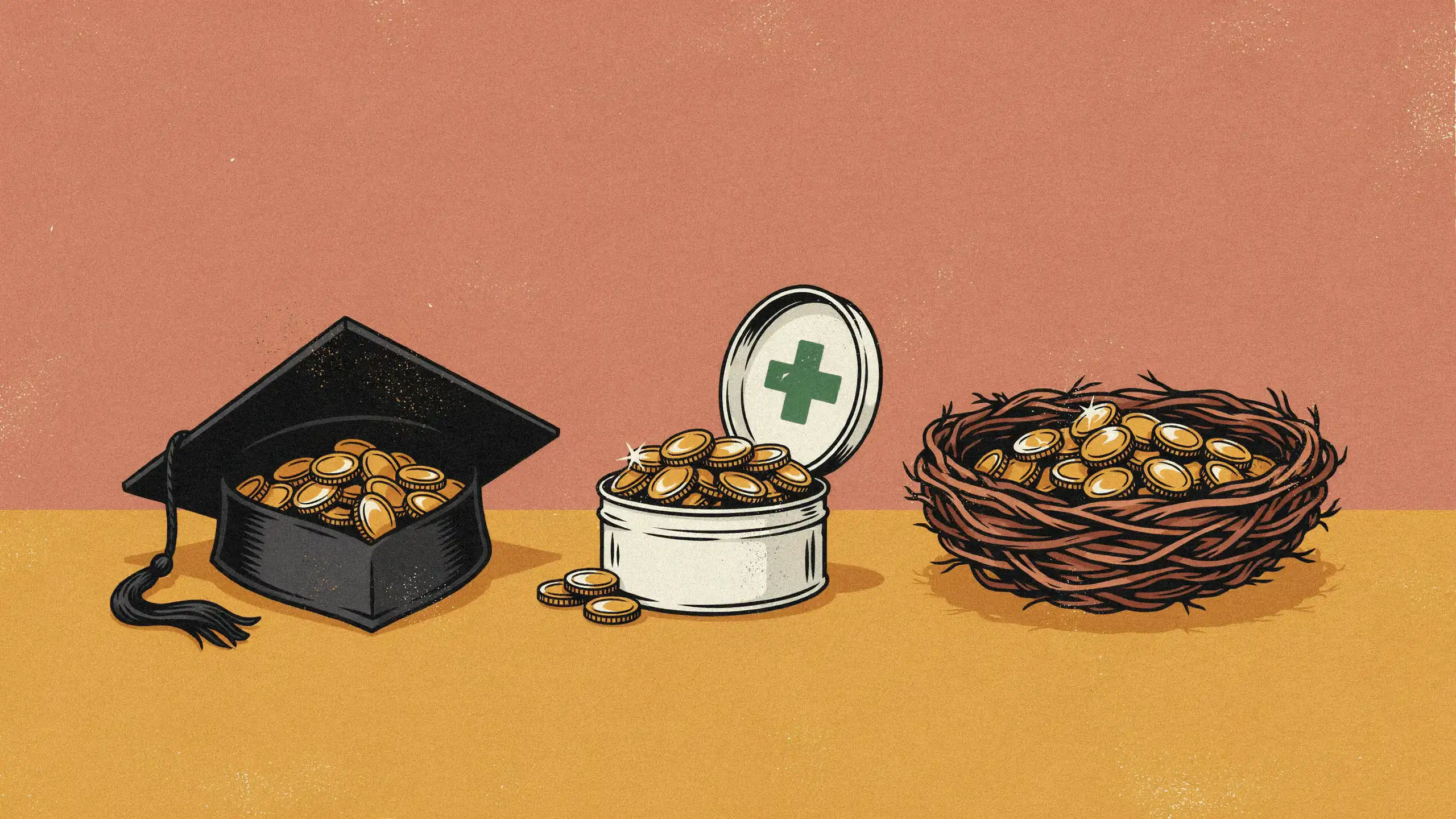

Pick the investment account by what the money is for, because the account decides how it’s taxed and when you can withdraw it. Use a 401(k) or IRA for retirement, a health savings account for medical bills, a 529 plan for education, and a taxable brokerage account for other long-term goals.
Pick the wrong one and it costs you later, in tax you could have avoided or a penalty for taking money out early.
A traditional 401(k) or individual retirement account (IRA) can cut your taxable income now, and you pay income tax on withdrawals in retirement. A Roth 401(k) or IRA does the reverse. You pay tax on what goes in, and qualified withdrawals in retirement are tax-free. Choosing between a Roth and a traditional IRA comes down to whether you expect a higher tax rate now or in retirement. You can put in up to $24,500 a year in a 401(k) and $7,500 across your traditional and Roth IRAs combined, with higher limits from age 50. Most withdrawals before age 59½ also cost a 10% penalty on top of any income tax.
A health savings account (HSA) is tax-free going in, while it grows, and coming out for qualified medical expenses. You can fund one only while you’re covered by an HSA-eligible health plan, such as one with a high deductible. A 529 plan grows tax-free and pays out tax-free for college and other qualified school costs, though what you put in isn’t deductible on your federal return. A taxable brokerage account has no tax break, but also no limits or withdrawal rules. You pay tax on its dividends each year and on gains when you sell.
You don’t need all five at once. Fill them in this order: your 401(k) up to any match your employer offers, then a Roth IRA or an HSA, then more 401(k) or a taxable account. A full financial order of operations also places debt payoff and an emergency fund among those steps.
A 28-year-old with no 401(k) who’s saving for retirement and for a down payment in four years needs two places, a Roth IRA for retirement and a high-yield savings account for the down payment.
Money you’ll need within about five years belongs in savings, not stocks, because a market drop right before you spend it could leave you short.

Editorial & Advertiser Disclosure: The editorial content on this page is not provided, commissioned, reviewed, approved, or otherwise endorsed by any advertiser. Opinions expressed here are ours alone, not those of any advertiser. The offers that appear on this site are from companies that compensate us. That compensation may influence which products we cover and where and how they appear on a page – including the order in which they appear – but it does not influence our evaluations, ratings, or opinions. We do not include every company or offer available in the marketplace.
Related: