The credit card, banking, and other financial offers that appear on this site are from companies that compensate us – for example, when you click a link, are approved for a product, or open an account. This compensation may influence how and where offers appear on the site, including the order in which they appear on category pages. It does not influence our evaluations, ratings, or opinions, which are ours alone. We do not include every bank, credit card company, or offer available in the marketplace.
Manage Money
Budgeting, setting up the right accounts, filing your taxes, planning ahead, and handling money as a couple. Organize your money and decide where it goes.
There are some jobs in life that you can DIY and others that you leave to the pros. While you can handle simple tasks like paying your bills, what about doing your taxes, forming a business, or making a will?…
Keeping a secret card, loan, or account from your partner breaks trust, and in a shared financial life the cost lands on both of you. Swap credit reports and a full list of accounts and debts with your partner, then agree on a spending limit above which either of you checks in first.
Block 15 minutes at the same time every week to read every new transaction in your checking and card accounts and check the bills due in the next seven days. A weekly money check-in catches a fraudulent debit charge or a short balance while it’s still cheap to fix, instead of weeks later on a statement.
Before you count on a tax break, find out whether it’s a deduction or a credit. A deduction lowers the income you’re taxed on, so it saves you only the amount times your tax bracket. A credit comes off your tax bill dollar for dollar. Check every credit you qualify for before you file.
Set savings to move automatically the day after payday and put your bills on autopay, so each good decision gets made once instead of every month. Automating your finances beats discipline because it takes willpower out of the process. Money that leaves checking before you see it never sits there tempting you.
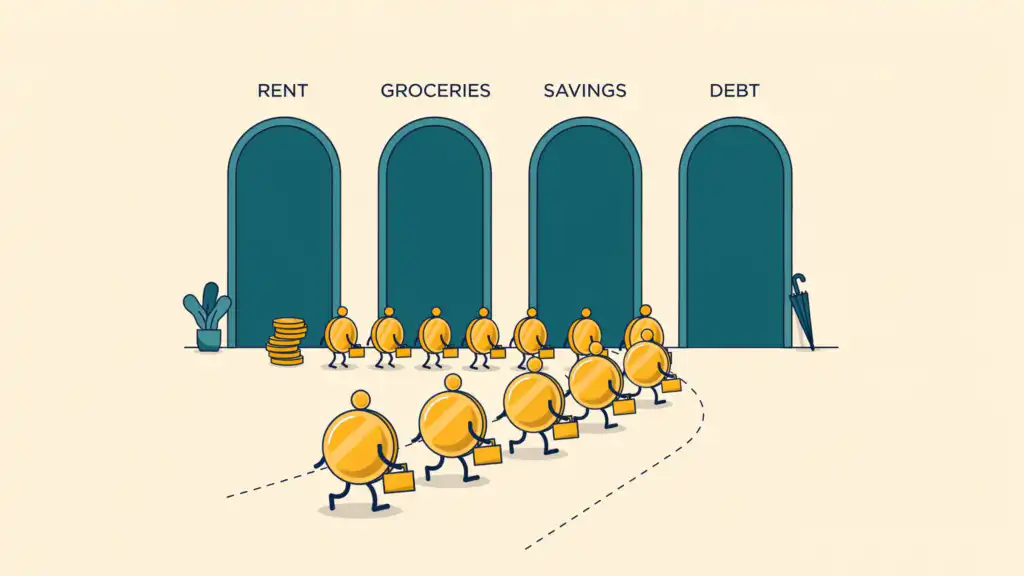
A zero-based budget only works if nothing is left out. List savings, debt payments, and once-a-year bills alongside rent until your take-home pay is fully assigned, then check it weekly. When you overspend one category, move money from another so the total still comes out to zero.
Following a financial order of operations means funding your goals one at a time instead of splitting every paycheck across all of them, so each dollar goes where it earns or protects you the most. Cover essentials first, then build a small emergency fund, capture your full employer match, and clear high-interest debt before you invest more.
Add up your net worth, everything you own minus everything you owe, on the same day every quarter. From the change since last quarter, subtract the market’s gains on your investments and home, or add back its losses. What’s left is what your saving and debt payoff added, and it shows whether your plan works.
Many, or all, of the products featured on this page are from our advertising partners who may compensate us when you take certain actions on our website or click to take an action on their website. However, this does not…
The average American spends nearly $1,300 – $1,400 per year on their cellphone plan. If you look at your own plan, chances are it’s a noticeable portion of your monthly bills. Your cellphone charges are probably higher or at least…
End of content
End of content
Make & Save More Money, Spend Less Time
One money tip, every morning
Join 50,000+ readers. Actionable, free, no nonsense – just the tip.