

The consequences of “financial risk” became apparent to many investors during the two-year period from 2007 to 2009. The stock market (as measured by the S&P 500) plummeted from 1562.47 on October 10, 2007, to 752.44 on November 20, 2009. As a consequence, many people lost more than one-half of their retirement savings.
The coronavirus pandemic was like a replay of those times as the S&P 500 dove from 3,380.16 to 2,304.92 in just a single month between February 21, 2020, and March 20, 2020.
These drops in the stock market made many investors realize the amount of risk they were taking with their investments. People saw their portfolios lose tens of thousands of dollars in days. Those who held strong waited months or years for their balances to return to their previous highs. Those who sold out of their investments likely locked in their losses.
Understanding risk, your risk tolerance, and how to reduce risk in your portfolio are essential parts of investing.
What Is Risk?
Even though all human endeavors have a measure of risk, human beings have a hard time understanding and quantifying “risk,” or what some call “uncertainty.” Many of us understand that risk is the possibility of loss.
Risk is all around us at all times, even if we don’t actively acknowledge it. There is no certainty that you will live beyond the day, drive to the grocery store without an accident, or have a job at the end of the month.
Most people are risk-averse. Essentially, we prefer to accept the status quo, rather than dealing with the unknown consequences of new endeavors or experiences.
This is particularly true in financial matters, and it is evident in the correlation of price and perceived risk: Investments considered to be higher risk must pay higher returns in order to get people to buy them.
Investment risk is generally measured by the asset’s price variability or volatility over a period of time. In other words, a common stock that ranges from $10 to $20 per share over a six-month period would be considered to be a higher risk than a stock that varied from $10 to $12 during the same period.
Practically speaking, the owner of the more volatile stock is likely to worry more about their investment than the owner of the one that sees less price fluctuation.
What is Risk Tolerance?
Risk tolerance is personal. How we perceive risk varies from person to person and generally depends upon an individual’s temperament, experience, knowledge, goals, and how long they will be exposed to the risk.
Risk itself is generally categorized by its potential impact and the probability of the event occurring.
Many people purchase a $1 lottery ticket with a payoff of $1 million, even though their loss is virtually certain (10,000,000 to 1) because the $1 loss doesn’t significantly impact their living standard or way of life.
However, few people would spend their month’s salary on lottery tickets since the probability of winning would not significantly increase.
At the same time, many people are willing to invest unlimited amounts of their savings into U.S. Treasury notes since the likelihood of their repayment is considered certain (1 to 1).
When humans exceed their risk tolerance, they show physical signs of discomfort or anxiety. To a psychologist, anxiety is those unpleasant feelings of dread over something that may or may not happen.
Anxiety differs from actual fear — a reaction when we encounter a real danger and our body instantaneously prepares an immediate fight or flee response. To a lesser degree, anxiety triggers similar physical reactions in our bodies, even though the danger may be imagined or exaggerated.
Being anxious over any extended period is physically debilitating, reduces concentration, and impairs judgment. For these reasons, it is important to identify your personal risk tolerance as it applies to different investments, since exceeding that tolerance is most likely to end with disappointing — or even harmful — results. Reputable investment advisors frequently tell their clients, “If an investment keeps you from sleeping at night, sell it.”
There are several questions you can ask yourself to help gain an understanding of your personal risk tolerance. Remember that there is no “right” level of tolerance or any necessity that you should be comfortable with any degree of risk.
People who appear to take an extraordinary risk financially or personally have most likely reduced the risk — unbeknownst to observers — with training, knowledge, or preparation.
For example, a stunt car driver expecting to be in a high-speed chase will use specially engineered autos, arrange for safety personnel to be readily available in the event of a mishap, and spend hours in practice, driving the course over and over at gradually increasing speeds, until he is certain he can execute the maneuver safely.
Why Determining Your Risk Tolerance is Important
Everyone’s risk tolerance is different. Knowing your own risk tolerance is an important part of successful investing.
As mentioned before, higher-risk investments generally need to offer higher potential rewards. This is why savings accounts pay lower interest rates than bonds, and stocks tend to offer higher returns than bonds.
If you have a low risk tolerance and feel anxious when you think about the money you could lose by investing in assets like stocks, you’ll likely be better off with less risky investments.
When investing, making frequent trades tends to correlate with worse results. If you don’t have a high risk tolerance, you might be tempted to sell out of your riskier investments when they drop. If you do this, you’ll be missing out on most of the returns those investments offer.
If you choose less risky investments, they’re less likely to experience large losses during a downturn. That means you won’t feel as anxious and be better able to hold those investments until they regain their value.
Questions to Ask Yourself Regarding Risk Tolerance
These questions can help you determine your personal level of risk tolerance.
1. What Is Your Default Level of Risk Tolerance?
Everyone has a sort of “default level” of risk tolerance.
Some people love skydiving while others can’t be paid to jump out of a plane, no matter how many parachutes they have.
Some people don’t mind taking risks if the reward is there while others are naturally cautious.
Try to think about yourself and your personality objectively. There’s nothing wrong with being risk-averse or being a risk-taker.
Try to imagine making an investment and losing some or all of your money. How would you feel if you lost $100, $1,000, $10,000?
- If losing even small amounts makes you nervous, you’re more likely to be a conservative investor.
- If you can think about losing large amounts without batting an eye, you’re a good candidate for being an aggressive investor who uses higher-risk strategies.
2. What Is Your Investing Timeline?
Your time horizon — when you’ll need the money from your investments — plays a big role in how well you can tolerate risk.
If you’re young and want to retire in 40 years, it’s not a big deal if you make a risky investment and wind up losing money in the short term, as long as you make money from your investments in the long run.
On the other hand, if you’re hoping to retire next year and your investments lose half their value, it doesn’t matter how they’ll perform over the next five or 10 years because your plans to retire next year will be ruined.
The more time you have before you need to take money out of your investments, the more risk you can tolerate in the short term.
3. Why Are You Investing?
Your financial goals can also impact the amount of risk you’re willing to accept.
If you’re investing for retirement, you don’t want to choose an all-or-nothing investment because failure means you won’t be able to retire.
If you’re investing for something that’s less important or that has a more flexible timeline, such as going on a dream vacation, you might be more willing to take a risk because failure won’t be as damaging.
4. How Much Can You Afford to Lose vs. What You Would Gain?
Think about your financial situation and the consequences of your investment, whether it turns out positively or negatively.
If you’re a multimillionaire, throwing $10,000 at a high-risk investment isn’t a huge deal because you probably won’t feel a $10,000 loss. If you only have $15,000 to your name, putting $10,000 into a single investment is a big deal because losing that money could devastate you financially.
You also have to think about the potential payoff from a successful investment.
A multimillionaire may be less interested in investments that could produce just hundreds or thousands of dollars if they go well. If you’re less well-off, an investment with those kinds of returns is more appealing and more worth taking a risk.
The most important thing to remember is that all investing is subject to risk. You shouldn’t invest money you can’t afford to lose. That means you should have a solid emergency fund before you get started.
5. How Can You Change Your Risk Tolerance Level?
The perception of risk is different for each person. Just as the stunt driver prepares for a dangerous scene in a movie or an oil worker selects a place to drill an exploratory well, you can manage your discomfort with different investment vehicles.
Learning as much as possible about an investment is the most practical risk management method.
Investors such as Warren Buffett commit millions of dollars to a single company, often when other investors are selling, because he and his staff do extensive research on the business, its management, products, competitors, and the economy. They develop “what-if” scenarios with extensive plans on how to react if conditions change.
As an investor grows more knowledgeable, they become more comfortable that they understand the real risks and have adequate measures in place to protect themselves against loss.
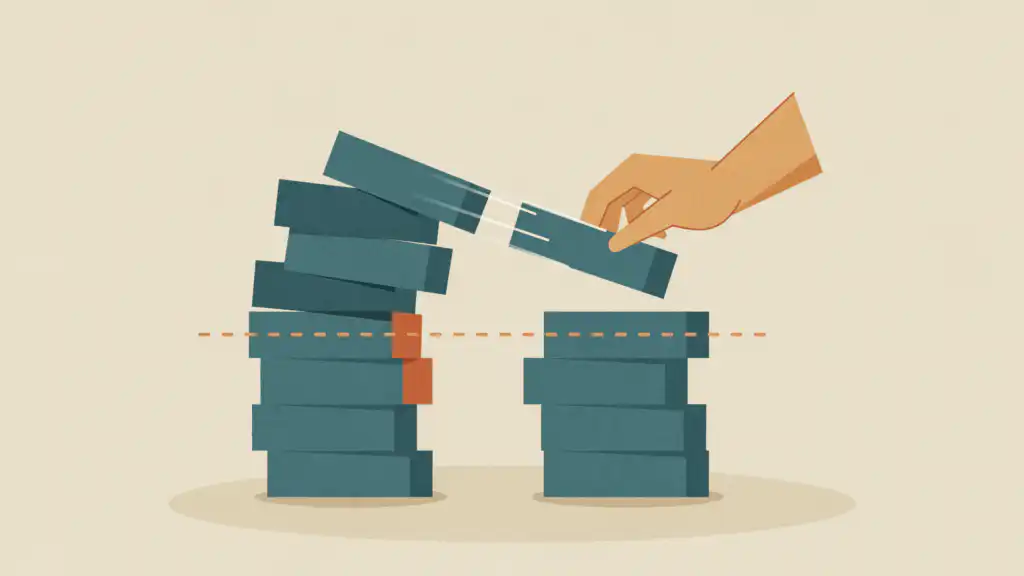
Diversification is another popular risk management technique. Instead of avoiding risk entirely, diversification reduces it by reducing the impact of a single failed investment. Owning a single stock magnifies the opportunity for gain and loss; owning 10 stocks in different industries dilutes the effect of one’s stock movement upon the investment portfolio.
Mutual funds and exchange-traded funds (ETFs) are a great way to accomplish this. They let you buy shares in one security — the fund — which holds shares in hundreds or thousands of companies. There are also mutual funds that focus on bonds and some that hold multiple asset classes, letting you build a diverse portfolio while buying shares in a single fund.
If you cannot reach your investment goals by limiting your investment to only “safe” assets, you can limit the potential of loss while exposing your portfolio to higher gains by balancing your investments between safe and higher-risk investment types. For example, you might keep 50% of your portfolio in stocks and 50% in bonds.
This potentially provides a higher return than a portfolio invested solely in bonds, but it protects against losses that might result in a 100% equity portfolio. The proportion of safe to higher risk assets depends upon your risk tolerance and investing time horizon.
One of the popular features that make robo-advisors like Betterment or SoFi Invest a popular way to invest is that they automatically rebalance your portfolio based on your desired asset allocation.
Final Word
Accumulating significant assets takes equal measures of the following:
- Discipline. Diverting current income from the pleasures of today to saving for tomorrow is not easy. Nevertheless, it is essential if you want to reach your future objective.
- Knowledge. Expending the effort to understand different assets and how they are likely to perform in changing economic environments is necessary if you are to select those investments that will deliver the highest return with the lowest risk.
- Patience. While “good things come to those who wait” is a popular advertising slogan, it is especially applicable to investing. The benefit of compounding interest accrues to those who can wait the longest before invading the principal (spending any of the accumulated assets).
- Confidence. Being able to manage your risk tolerance effectively — understanding which investments are worthwhile and which to avoid — is required in a complex investment environment. Self-knowledge allows you to understand why some investments make you anxious and how to proceed to differentiate between perceived and real risk.
Before you make investment decisions, you need to consider your reasons for investing as well as your risk tolerance. If you go into an investment with a plan and an understanding of the potential outcomes, it will be easier for you to follow that plan and profit from a successful investment.

Editorial & Advertiser Disclosure: The editorial content on this page is not provided, commissioned, reviewed, approved, or otherwise endorsed by any advertiser. Opinions expressed here are ours alone, not those of any advertiser. The offers that appear on this site are from companies that compensate us. That compensation may influence which products we cover and where and how they appear on a page – including the order in which they appear – but it does not influence our evaluations, ratings, or opinions. We do not include every company or offer available in the marketplace.
Related: