
Banks and credit unions have a fair amount in common. Both provide comparatively safe places to hold cash for spending and saving. Both make loans and extend lines of credit. And both provide basic financial services, like cutting bank checks.
Yet these two types of financial institutions are anything but interchangeable. Credit unions aren’t better than traditional banks, nor vice versa. Instead, each has strengths and weaknesses you need to understand before opening that first deposit account or applying for a loan with a new financial institution.
The Differences Between Banks & Credit Unions
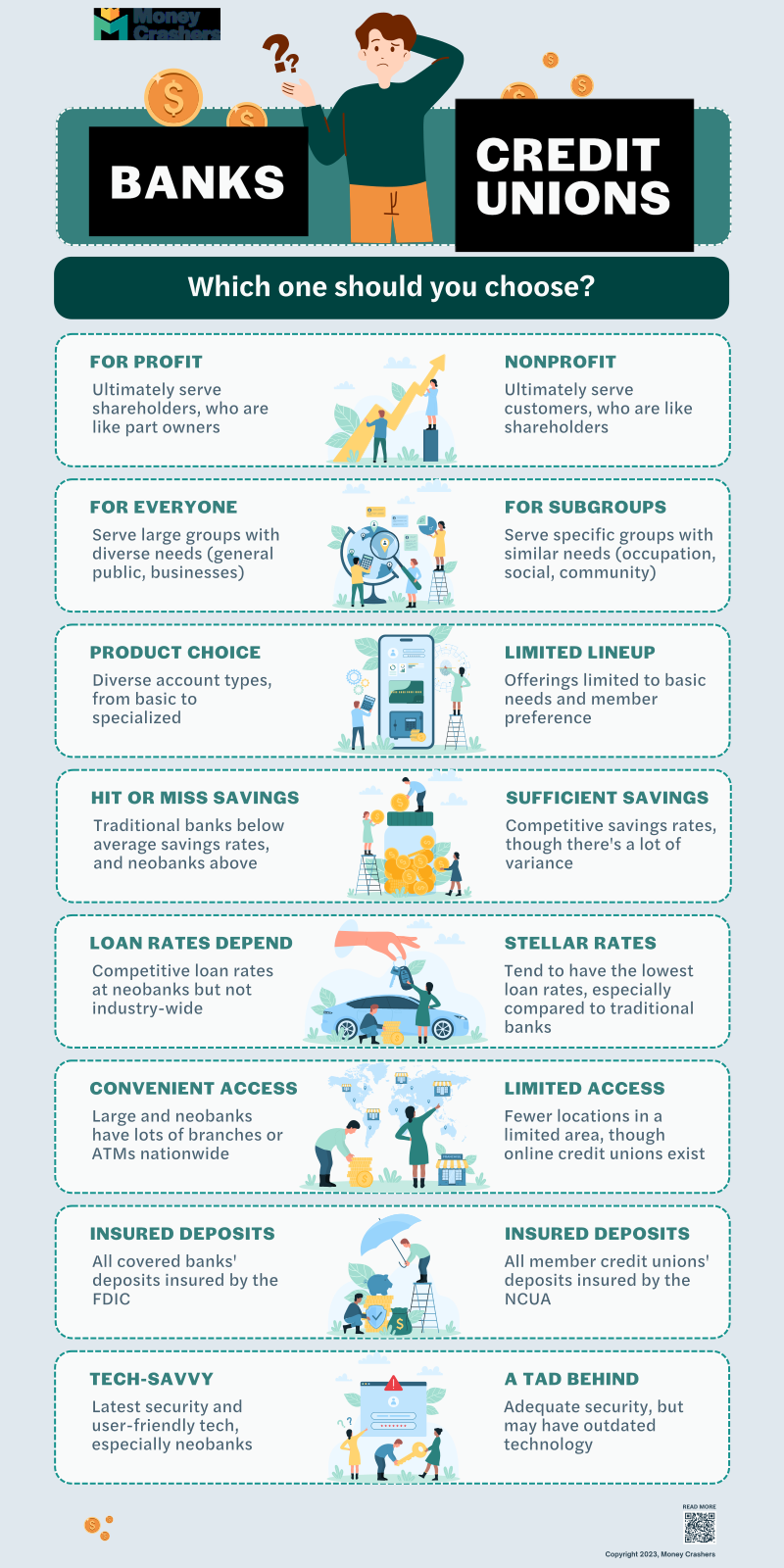
The most influential difference is that banks are for-profit and about making money and credit unions are nonprofit and about customer benefits. These differences trickle down to impact everything the organization does. Banks exist to enrich their shareholders. Credit unions exist to serve customers, who are also part-owners of the organization.
Banks and credit unions tend to differ in other ways as well, though the lines often blur and they have lots in common as well. For example, most banks and credit unions offer checking and savings accounts and make loans to consumers and businesses.
But there are enough differences between the typical bank and the typical credit union to warrant a side-by-side comparison.
Pros & Cons of Banks
Every bank is different, but many share upsides like convenient branch and ATM locations, few eligibility restrictions for applicants, and better technology. Many also share downsides like higher fees, lower interest rates, and poor customer service.
Pros
- More convenience on average
- More product and service choice
- Few eligibility restrictions
- Better technology
- FDIC insurance up to $250,000
Cons
- May have higher fees
- Interest rates may not be competitive
- May put shareholders ahead of customers
- Customer service can be poor
Pros
The typical bank is more convenient and accessible than the typical credit union. Many banks offer a wide range of deposit accounts, loan types, and other financial services as well.
- Digital and real-world convenience. Though some community banks have just a handful of branches, banks as a whole tend to have more branches, more ATMs, and more convenience in general. Branchless online banks are more common than online credit unions as well.
- Broader lineup of products and services. Banks tend to offer more account and loan variety. Many also offer nonbanking services like financial planning and wealth management.
- Anyone can apply. Most banks have few restrictions on eligibility. Generally, anyone over 18 with a U.S. address can apply.
- Better technology. Though smaller banks can be behind the curve technologically, banks as a whole are more likely to have state-of-the-art online and mobile apps that are easy to use.
- Deposit insurance. Federally insured banks have FDIC insurance at least up to the current limit of $250,000. Look for the “member FDIC” logo on the bank’s website or at a branch.
Cons
Banks often have higher fees and less competitive interest rates than credit unions, though there are many exceptions. Because they exist to turn a profit and reward shareholders who may not be customers, banks tend to be less customer-friendly overall.
- Potential for higher fees. Banks as a whole have a reputation for charging higher fees overall, and for hidden “junk” fees that increase the cost of doing business with them. Not all banks are guilty of this, but it’s a widespread practice.
- Less competitive interest rates. Traditional banks tend to pay lower interest rates on savings accounts and charge higher interest rates on loans. Online banks are better in this regard, but many customers aren’t comfortable with online-only banks yet.
- Focus on shareholders before customers. Banks are for-profit institutions whose highest priority is maximizing shareholder value. Even community banks need to turn a profit, which impacts their ability to serve individual customers and communities at large.
- Potential for poor customer service. Many traditional banks have notoriously bad customer service, at least for regular customers without huge balances. It’s often difficult or impossible to get a representative on the phone or get them to fix the problem once you do.
Pros & Cons of Credit Unions
Credit unions are nonprofits that tend to be smaller and more narrowly focused on specific geographies or groups of people than banks. That has advantages and disadvantages for their customers.
Pros
- Potentially more competitive interest rates
- Focus on customers (who are also shareholders)
- Potential for lower fees
- More personalized service
- National Credit Union Administration insurance up to $250,000
Cons
- Less availability and convenience
- More restrictions on membership
- Less choice of products and services
- Technological limitations
Pros
Credit unions tend to be more customer-friendly than banks, both in terms of the service they provide and the overall cost of doing business with them.
- Potential for more competitive interest rates. Credit unions’ interest rates tend to be more competitive. That means they pay higher interest rates on savings balances and charge lower rates on loans. That said, most credit unions can’t compete with online banks’ rates.
- Potential for lower fees. Credit unions charge fewer junk fees and have lower fees overall than most banks. For example, whereas few traditional banks offer truly free checking accounts, most credit unions do.
- More likely to put customers and community before profit. As nonprofits owned by their customers, credit unions naturally put customers and their communities first. They’re not single-mindedly focused on maximizing shareholder value.
- More personalized service. Credit unions often have better customer service than banks. Their representatives are easier to reach and better at solving problems.
- Deposit insurance. Federally insured credit unions have NCUA insurance up to $250,000. Though not as widely known as FDIC insurance, NCUA coverage is essentially the same.
Cons
Many credit unions lack bigger banks’ resources and expertise, which makes them less appealing to customers seeking convenience and the latest technology.
- Less convenient and widely available. Many credit unions are small, with small numbers of branches clustered in narrow geographical areas. Even if they allow fee-free withdrawals from ATMs in nationwide networks, they’re less convenient and accessible overall.
- More restrictions on membership. All credit unions impose some membership restrictions beyond requiring applicants to be U.S. adults. In some cases, these restrictions are strict, such as requiring all members to work for a particular employer.
- Fewer products and services on average. Though some offer nonbanking services like wealth management, most credit unions focus on basic banking services like checking and savings accounts, mortgages, and car loans.
- Technological limitations. Smaller credit unions are especially likely to be behind the curve. Many still don’t have mobile apps, and online account access can be glitchy and clunky.
Should You Choose a Bank or Credit Union?
Banks and credit unions both have their place. Many consumers and business owners use both, perhaps turning to an online bank for a super high-yield savings account while paying their low-rate credit union mortgage.
But if you prefer to do all your banking with one financial institution, or you only have the bandwidth for one new banking relationship right now, you might need to choose one or the other.
When to Choose a Bank
A bank makes more sense if you prize convenience, product choice, and technology over customer service.
- You want a one-stop financial institution. Banks are more likely to offer an exhaustive list of products and services. That means less-common deposit account and loan options as well as nonbanking services like wealth management and financial planning.
- You don’t want to jump through any eligibility hoops. Banks aren’t as picky about who they allow to open an account. The most common restrictions involve geography; some banks only accept applications from residents of states where they operate.
- You want a high-tech financial partner. While some smaller banks are behind the times, banks as a whole are more likely to have state-of-the-art online banking and mobile apps, plus innovative tech features to make money management easier.
When to Choose a Credit Union
A credit union is more likely to pair a friendly, personalized experience with better pricing on loans and deposit accounts.
- You want excellent loan rates without shopping around. Most credit unions have competitive rates on common loan types, such as home loans and car loans. You can probably find a better deal by shopping around, but if you’d prefer not to take the time, a credit union gives you a better shot at a good-enough rate.
- You seek helpful, personalized service. Credit unions generally offer friendlier, more hands-on, more knowledgeable service and support. That’s a plus if you’re not comfortable answering your own financial questions.
- You want a sense of community and shared purpose. One upside to their membership restrictions is credit unions’ sense of shared purpose and community. Credit unions tend to focus their lending activities in the communities they serve and may provide free or low-cost financial education to members and nonmembers alike.
FAQs
Banks and credit unions have many features in common, but it’s important to understand what sets them apart. These are some of the most common questions that come up for customers choosing between the two.
Are Banks Safer Than Credit Unions?
On the whole, banks aren’t any safer than credit unions. They’re no less safe either. Federally insured banks and credit unions both protect customer deposits at least up to $250,000 per customer, per ownership type. Some insure deposits up to even higher limits.
That protection ensures you won’t lose covered funds held in a federally insured financial institution should that institution fail. When choosing a bank or credit union, look for the “member FDIC” or “member NCUA” logo. Avoid opening accounts with uninsured banks or credit unions.
How Easy Is It to Join a Credit Union?
Although credit unions as a whole have loosened their membership requirements over time, a lot still depends on the individual credit union.
Historically, credit unions required members to have clear common bonds, such as residence in the same geographical area or membership in the same professional association or union. Nowadays, many credit unions are essentially open to all, thanks to easy-to-meet membership requirements like paying a nominal fee to join a particular nonprofit organization.
Some credit unions continue to limit membership in ways that may not be obvious at first though. For example, a credit union that’s open to members of a major labor union may have an online application process that appears to accept applicants from all over the U.S. But you still need to prove that you’re a dues-paying union member as part of that application.
Do Credit Unions Have Mobile Banking Apps?
Despite the industry’s reputation as being behind the times technologically, many credit unions now have comprehensive, easy-to-use mobile apps or mobile-responsive online banking portals.
If you expect to be able to manage your finances on the go, make sure any credit union you’re considering has a good mobile presence. That’s not a given at smaller credit unions, which often lack the resources or technical know-how to create and maintain mobile apps (or even redesign their websites for mobile devices).
Final Word
You can open an account or apply for a loan at your local credit union if you already have a traditional or online bank account, and vice versa. Millions of people have relationships with both types of institutions, and it’s best not to rule out either.
Still, it’s helpful to understand the key differences between banks and credit unions because there are many scenarios where one really is better than the other. If you want your deposits to fund small-business loans in your hometown, your local credit union is a better fit than a megabank like Citi or Chase. If you need a slick mobile app packed with the latest in financial technology, an online bank with a reputation for innovation makes the most sense.
