
We all have our bad habits. Mine is a sweet tooth. I know that I’d be healthier if I could quit eating sugar, but the vague promise of better health in the future pales next to the joy of eating a chocolate chip cookie right now.
Fortunately, there is one thing that keeps me from bingeing on sugar every day: the cost. For instance, a warm brownie sundae from Baskin-Robbins costs $5.49 plus tax. Scarfing down one of those every day would cost me about $40 a week, or over $2,000 a year. That’s enough to stop me from splurging, even if the 800 calories in the sundae aren’t.
Of course, sweets aren’t the only bad habit that comes with a high price tag. In fact, pretty much every guilty pleasure that can hurt your health is also bad for your wallet. Taking a good, hard look at how much these harmful habits are costing you could be the key to kicking them for good – or at least getting them under control.
Bad Habits That Cost You Money
1. Smoking
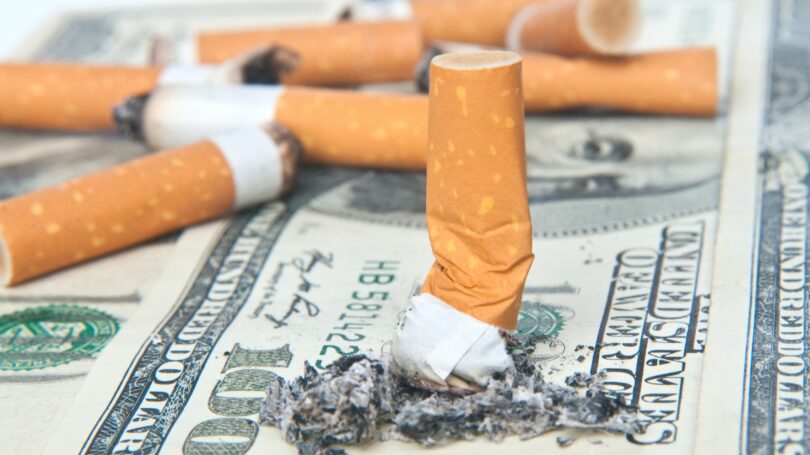
The mother of all bad habits, this one shows up at the top of every list. And there’s a good reason for that. Smoking raises your risk for just about every health problem there is, including heart disease, stroke, emphysema, and at least a dozen kinds of cancer. According to the Centers for Disease Control and Prevention, smoking cigarettes “harms nearly every organ of the body.”
There’s no shortage of finger-wagging articles online that go on at great length about all these health risks. However, there aren’t many that talk about the other cost of smoking: the cost in dollars.
What This Habit Costs
Let’s start with the cigarettes themselves. According to The Awl, in mid-2016, the cost of a single pack of cigarettes ranged from $5.19 in Kentucky to a whopping $12.60 in New York state. Taking the average price of $7.17 per pack, a pack-a-day habit would run you $2,617 per year. And that’s not even counting the interest you could earn on that money if you put it into an investment account instead.
Then there are all the indirect costs that go with being a smoker. Smokers face significantly higher costs for health and dental care. They can also lose income if smoking-related health problems lead them to miss work or limit their productivity. And there’s a certain amount of bias against smokers in society today, which can also hurt their careers.
In 2017, WalletHub did a study estimating how all these costs add up for smokers across the country. It found that the cheapest state to smoke in was Kentucky, where the cost is “only” $22,825 per year, or $1.1 million over a lifetime. In New York, smokers pay a premium of $45,353 per year, or $2.3 million per lifetime. Yikes.
How to Save Money
Obviously, the best way to cut the costs of smoking is to quit. Giving up smoking altogether cancels out all the costs – both for your wallet and for your health. There are several ways to do it:
- Cold Turkey. The most popular way to quit smoking is to go “cold turkey” – that is, just stop all at once. According to WebMD, about 90% of smokers who try to quit choose this method. Unfortunately, most of them don’t succeed. Quitting all at once plunges your body into a state of nicotine withdrawal, and most smokers can’t handle the symptoms. Only about 4% to 7% manage to stay smoke-free this way without help. On the plus side, the cold turkey method doesn’t cost anything.
- Nicotine Replacement Therapy (NRT). Many smokers find it easier to quit if they use nicotine-replacing products, such as patches, gum, or even e-cigarettes. These products reduce withdrawal symptoms, so smokers can focus on changing their behavior. However, using NRT isn’t cheap. Larasig puts the cost of NRT at anywhere from $80 to $302 for the first six weeks. That’s less than the average cost of a daily pack of cigarettes, but not by that much. Also, using NRT means you’re still hooked on nicotine, even if it’s in a less harmful form. Sooner or later, you’ll need to go through a second round of quitting to get off the NRT itself.
- Medication. There are also prescription drugs that smokers can take to reduce their cravings for nicotine. These include bupropion (Zyban) and varenicline (Chantix). These drugs can be as or more effective than NRT at helping smokers quit. However, they can also have side effects, such as headache, nausea, and sleep problems. Also, these drugs are pricey. According to Drugs.com, generic bupropion costs about $25 for a 30-day supply, or $75 for a typical 12-week course. Chantix, which doesn’t have a generic version, costs around $3.50 per pill, or $294 for 12 weeks. Some insurance plans cover these costs, but others don’t.
- Cognitive Behavioral Therapy (CBT). Some smokers work with a counselor to understand their habit better. The counselor helps them find their smoking “triggers” – thoughts, feelings, and situations that make them want to smoke – and work around them. CBT is not that effective by itself, but combining it with NRT or medication can greatly improve the odds of quitting. However, adding CBT also increases the cost of these methods – and insurance won’t always cover it.
Some people, no matter how they try, just can’t kick the habit. However, they can at least reduce the cost – and the health risks – by smoking less. The U.K.’s National Institute for Health and Care Excellence (NICE) recommends this approach, called “harm reduction,” for people who can’t or won’t stop smoking.
NICE suggests that smokers who are not ready to quit should reduce the number of cigarettes they smoke. If they need to, they can use NRT products to help them cut back. NICE says that smokers who cut back and use NRT often find it easier to quit completely later on. However, NICE also stresses that quitting all at once, if you can, has the greatest benefits for your health.
2. Drinking Alcohol

Drinking isn’t nearly as big a threat to your health as smoking. In fact, there’s evidence that drinking in moderation – around one drink per day for women, or two for men – could even be good for you. The Harvard School of Public Health reports that moderate drinkers have a lower risk of heart disease, diabetes, and gallstones than nondrinkers.
Heavy drinking, on the other hand, can take a serious toll on your health. Its long-term risks include high blood pressure, heart and liver damage, and several types of cancer. And, in the short term, it can play a role in violent crime and road deaths from drunk driving.
Of course, there are some people who shouldn’t drink at all. For example, alcoholics are unable to control the amount they drink, so they have to avoid all alcohol (or else take medication to control their cravings). Pregnant women are also advised to avoid alcohol completely because it could harm the developing baby. And anyone under the age of 21 who drinks risks arrest, a fine, and the loss of their driver’s license.
But even for people who can – and do – safely drink in moderation, alcohol still has its cost. A drink a day might not hurt your health, but it still has an impact on your wallet.
What This Habit Costs
According to the annual consumer survey done by the Bureau of Labor Statistics, the average U.S. household spends $515 per year on alcoholic beverages. However, that’s only an average. The actual amount you spend on alcohol depends on what you drink, how much of it you drink, and where you drink it.
For instance, say you’re an occasional drinker who sometimes likes a bottle of domestic beer with dinner. You pay $7 for a six-pack of your favorite brew, so that’s about $1.17 per drink. If you drink two beers every week, that works out to only a little over $121 per year.
However, if you like to do your drinking in trendy bars, you can expect to pay a lot more per drink. At places like that, a single cocktail can cost $10 or more. If you drink two cocktails per night, five nights per week, you’re looking at a total tab of $5,200 per year.
For most people, the cost of a drinking habit probably falls somewhere between these two extremes. The National Institute on Alcohol Abuse and Alcoholism offers a simple calculator you can use to figure out how much it is for you. Just enter some facts about how often you drink and the average cost of your drink of choice, and it will tell you how much you spend on booze per week, per month, and per year.
How to Save Money
The easiest way to reduce the cost of alcohol is simply to drink less. If you’re a heavy drinker, this approach also has health benefits. Cutting back to one or two drinks per day helps you avoid health problems that could cost you money down the road. However, if you don’t need or want to drink less, there’s another way to cut the cost of this habit: Pay less for each drink. The best way to do that is to do your drinking at home, rather than going out to bars.
An article at Chron.com says that bar owners typically need to set their prices for drinks at four to five times the actual cost of the liquor in order to make a good profit. That means a cocktail that costs you $10 at a bar would probably cost only $2 to mix yourself at home. Switching out five cocktails at a trendy bar for five homemade ones each week would save you $2,080 per year.
However, for many people, the best part of drinking at a bar isn’t the taste of the fancy cocktails; it’s the atmosphere. If you enjoy the experience of hanging out at the bar with your friends, you can cut the cost by switching from cocktails to beer or a low-priced wine. You can also learn to nurse one drink all night, or have one and then switch to seltzer and lime. As a bonus, this will also help ensure you make it home safely.
You can also save money on wine when you go out to eat. Choose a place that lets you bring your own bottle, or BYOB. This gives you a chance to choose a good wine with a low price. You might have to pay a “pour fee,” but the price should still be less than buying wine by the glass.
3. Gambling

Most Americans have bet on something at least once in their lives. According to the National Council on Problem Gambling (NCPG), about 85% of American adults have gambled at least once, and 60% have gambled in the past year. This figure covers all forms of gambling – from a casual bet on a football game to playing the slots in Vegas.
Unlike smoking and drinking, gambling doesn’t pose a threat to your physical health. However, your mental and emotional health are another story. All gamblers lose sometimes, and the more you lose, the more strain it puts on your household finances. This can lead to stress and damage your relationships.
For some people, gambling can be an addiction. The NCPG says between 3% and 4% of American adults are problem gamblers. They have trouble controlling their urge to gamble, and it causes minor or major problems in their lives.
Even when gambling isn’t an addiction, it can still be an expensive habit. Americans lost a total of $142.6 billion on games of chance in 2014. The U.S. population that year was 318.9 million, so if only 60% of them gambled, that averages out to $745 apiece.
What This Habit Costs
To some people, the word “gambling” conjures up visions of ritzy casinos. However, gambling takes many forms. Anything you bet money on – whether it’s a casual poker game with friends, a fantasy football league, or a trip to Atlantic City – is a kind of gambling.
Thus, the cost of this habit can vary widely, depending on the stakes and how often you play. If you place a $10 bet on a horse once a month, your habit will cost you no more than $120 a year, even if your picks never win. By contrast, it’s possible to go through $180 in one hour pumping quarters into a slot machine. If you play for two hours every week, you could potentially spend as much as $18,720 in a year.
Most forms of gambling have one thing in common: The odds aren’t on your side. The Cost of Play chart at GamblingFacts.ca shows the average amount it costs to spend an hour playing different casino games. The cost ranges from $0.95 to $165 per hour, but there’s no such thing as a game where the player comes out ahead. So, with nearly any kind of gambling you can choose, you should expect to lose money over the long term.
One of the worst bets of all is playing the lottery. True, a lottery ticket only costs $2 – but the odds of hitting the jackpot are minuscule. According to the official statistics for Powerball, the odds of winning the big jackpot are a mere 1 in 292.2 million. Of course, there are several smaller prizes as well, ranging from $4 to $1 million. Factor those in, and any given ticket has a 1 in 24.87 chance of winning a prize – but most likely, it will only be a small one.
An article at The Awl calculates that the “expected return” on a $2 Powerball ticket is about $0.94. In other words, if you spend $2 on a ticket every day for 10 years, you’ll spend a total of about $7,300, and you’ll probably get around $3,431 back in prizes. By contrast, if you put that same $14 a week into a low-risk investment earning 2% APY, you’ll end up with $8,059.
How to Save Money
If your gambling habits are causing serious financial stress for you or your family, you might be a problem gambler. The NCPG website has several screening tools you can use to figure out if you have a gambling problem. If you do, there are resources on the site to help you get treatment.
However, if you play from time to time for fun, there are ways to indulge your habit at less expense. For example, if you like to play cards, you can still enjoy the game while playing for lower stakes. Try inviting friends over for a game of “nickel and dime poker,” where you only bet with pocket change. You can even try playing with chips and not betting money at all.
If you prefer casino gambling, choose the games that have a lower cost of play. According to GamblingFacts.ca, your best bets include inside minimum roulette and basic rules blackjack. By sticking to these games, you can enjoy the atmosphere of the casino for only a dollar or two per hour, on average.
Playing the lottery always gives you terrible odds – but all the same, a lot of people enjoy it. To them, spending $2 on a lotto ticket is buying a fantasy. For one whole week, they get to dream about what they’ll do if, against all odds, they strike it rich. Even if they lose – as they usually do – they consider that weeklong daydream to be worth the $2 they spent.
Playing the lottery this way isn’t unreasonable – as long as you only buy one ticket. Sure, buying more tickets increases your odds of winning, but they’ll still be incredibly tiny. One ticket is all it takes to give you a remote chance of winning – and a chance to dream about how you’d use the winnings.
The bottom line, with any form of gambling, is to see it as entertainment – not a serious way to make money. That way, you can focus not on winning, but on getting the most fun for your dollar. Compared to real investments, gambling of any kind is a lousy deal. But compared to spending $12 on a movie ticket, spending a couple of bucks an hour at the casino isn’t such a bad value.
4. Fast Food
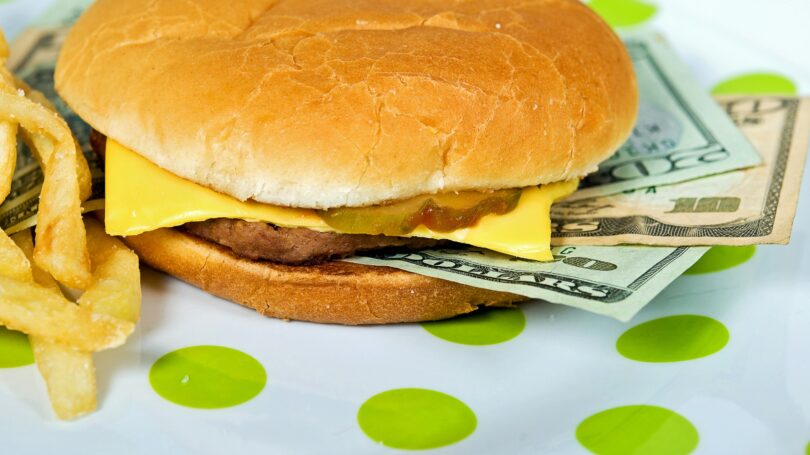
We all know that fast food isn’t the healthiest fare. But sometimes, it’s hard to resist.
In some cases, it’s the convenience that tempts us. After a long, exhausting day at work, you want to relax when you get home, not spend the next half hour cooking dinner. It’s a lot easier to run through the drive-through on the way home, or maybe send out for pizza.
Other times, it’s the taste we can’t resist. Pretty much everyone, no matter how healthy, has at least one guilty pleasure where food is concerned. Whether it’s a big, juicy burger or an ice cream sundae, there are times when we give in to the craving.
Actually, fast food isn’t nearly as bad these days as it used to be. To please health-conscious consumers, most chains are offering at least a few healthy options, such as salads or grilled chicken. But there’s one thing these chains can’t change: their cost.
What This Habit Costs
It sounds strange to talk about fast food as expensive. After all, chains like McDonald’s and Burger King are always bragging about their great values. And it’s true: when you compare these places to full-serve restaurants, they’re cheaper.
Compared to a home-cooked meal, though, they don’t look like such a great deal. Business Insider found that the cost of a fast-food meal ranges from $3.86 to $14 per person. By contrast, an adult cooking at home on the USDA Low-Cost Meal Plan could prepare a whole week’s worth of meals for no more than $55.60. Assuming that adult is eating three square meals a day, that works out to around $2.65 a meal.
Spending $5 or $10 on one fast-food meal isn’t a huge expense. When you make a habit of it, though, it adds up. If you hit the drive-through once a week, spending $7.50 each time, that works out to $390 over the course of a year. That’s more than $250 over what you would have paid to eat at home.
How to Save Money
How you control this habit depends on why you eat fast food. If you do it mainly for the sake of convenience, then the solution is to plan ahead. Figure out when and why you’re most likely to hit the drive-through. Then think about ways you could plan ahead to have cheaper, healthier homemade foods on hand at those times.
Here are a few examples:
- On-the-Go Breakfasts. When you’re in a rush in the morning, it’s a lot quicker to grab a doughnut and coffee on the way to work than to make breakfast, eat it, and wash up. To give yourself an alternative, have a few breakfast items on hand that are easy to eat on the go. A cup of yogurt, possibly topped with fruit or granola, is a popular grab-and-go breakfast. You can also whip up a batch of muffins or homemade breakfast burritos over the weekend and freeze them for quick weekday breakfasts. Another good alternative is overnight oatmeal. If you leave oats soaking in milk overnight in the fridge, they’ll be soft enough to eat by morning. All they need is a quick zap in the microwave to warm them up. You can customize this recipe to your taste by adding yogurt, fruit, nuts, or seeds.
- Brown-Bag Lunches. If you have an hour or less for lunch, running out to a fast-food place is one way to grab a meal and still have time to eat it. However, you can save time – as well as money – by packing your own lunch. A brown-bag lunch doesn’t have to mean the same old sandwich and fruit every day. It’s easy to pack dinner leftovers in a microwaveable container and heat them up at work. You can also pack salads, with dressing on the side so they don’t get soggy. Or enjoy a smorgasbord lunch, with bite-sized bits of meat and cheese, cut veggies, fruit, nuts, and crackers.
- Plan-Ahead Dinners. If you know you’re going to be working late, you can plan ahead to have dinner ready when you come home. A slow cooker is an ideal tool for this. You can take five minutes in the morning to load your ingredients into the pot, set it on “low,” and have a hot meal waiting for you at dinnertime. An online search for “slow cooker recipes” will turn up hundreds of meals you can try.
- Quick-Fix Dinners. If you don’t have a slow cooker, you can still do most of the work of making dinner ahead of time. Over the weekend, prepare some make-ahead freezer meals that you can heat up at dinnertime. Or, even easier, freeze the leftovers from any dinner to thaw and eat on a busy night. You can also do the prep work for dinner ahead of time – for instance, preparing ready-cut veggies and sauce for a stir-fry. All you have to do when you get home is toss them in the pan and cook them.
- Snack Time. Sometimes, when you’re out and about, you suddenly realize that you’re starving. Rather than wait until you get home, you grab a quick snack from a fast-food place. To avoid getting caught short like this, carry healthy snacks when you’re on the go. Fruit, nuts, crackers, and granola bars are all easy to slip into a pocket or purse, and they’ll give you the energy you need to finish your errands.
If you eat fast food mainly because you’re hooked on the taste, you can still find ways to indulge more cheaply. Most fast-food staples, such as hamburgers and pizza, are easy to make at home. As a bonus, when you prepare these dishes at home, you can make them healthier than the versions sold at most fast-food joints. With a little practice, you might find that you’re cooking up a homemade version you like even better than the original.
You can also search online to find recipes for “copycat” versions of specific fast-food treats. McDonald’s Egg McMuffin, Chick-fil-A nuggets, and Wendy’s Frosty all have DIY versions online. Even if they don’t taste exactly like the real thing, they’re good enough to satisfy your craving most of the time. You can still indulge in the real thing occasionally as a special treat – just not every day.
5. Caffeine

You’ve probably heard the expression “wake up and smell the coffee.” For some people, waking up and coffee go hand in hand. We’ve all met people who can’t function properly until they’ve had their morning coffee. And it’s not just the smell that wakes them up – it’s the caffeine. A single cup of coffee contains about 100 mg of this legal stimulant drug, which makes people feel more awake and alert.
Other folks aren’t coffee drinkers, but they still have a caffeine habit. They get their daily caffeine kick from tea (hot or iced), energy drinks, and sodas. The caffeine content of these drinks varies, from as little as 25 mg in a glass of iced tea to over 200 mg in some energy drinks. But even iced tea will give you a caffeine “buzz” if you drink enough of it.
There’s no clear consensus on whether caffeine is good or bad for you. There’s some evidence that it can interfere with sleep, upset your stomach, raise your blood pressure, and worsen diabetes – especially at high doses. But studies also point to helpful effects, such as improved memory and a lower risk of stroke, Alzheimer’s disease, and some cancers.
To complicate matters more, many drinks containing caffeine are also high in sugar. Non-diet colas and energy drinks, as well as many coffee-based drinks, are loaded with it. So, it’s possible your caffeine drink of choice could also be a threat to your teeth and your waistline.
What This Habit Costs
Health-wise, caffeine isn’t the worst habit you can have. Cost-wise, though, it can be damaging – especially if you get your caffeine from pricey coffeehouse brews. In fact, financial guru David Bach coined the term “the latte factor” to refer to small everyday expenses that have big long-term costs.
Here’s a look at how the cost of coffee adds up over time. A Grande (16-ounce) cup of brewed coffee from Starbucks costs about $2. If you buy one every morning, your java habit is costing you $730 over the course of a year. And if your drink of choice is something fancy like a latte or mocha, the costs are more than doubled.
If your caffeine drink of choice is soda rather than coffee, the cost varies even more. Here’s what it costs to buy one 12-ounce serving of cola from different places:
- Store-brand cola costs $2.99 for a dozen 12-ounce cans, or $0.25 per serving.
- A 2-liter bottle of store-brand cola costs $0.89, or $0.16 per serving.
- A dozen cans of Coca-Cola cost $6.79, or $0.57 per serving.
- A 2-liter bottle of Coke costs $2.10, or $0.27 per serving.
- A single 20-ounce bottle of Coke costs $1.89, or $1.13 per serving.
This means drinking two glasses of cola per day costs you $182.50 a year if you buy the cheap stuff in cans. But if you buy single bottles of Coke from the vending machine, the tab comes to $412.45.
How to Save Money
To control your caffeine habit, first you have to figure out what’s driving it. If you find that you rely on caffeine to keep you alert through the day, maybe what you need is more sleep. Getting more shut-eye could help you cut down on the amount of caffeine you need, or maybe even quit entirely.
On the other hand, if what you love about your morning coffee is the taste, you can indulge a lot more cheaply if you brew your own. A pound of good coffee costs about $9 and can make roughly 40 cups. That’s just under $0.23 per cup – about one-tenth of what you’d pay at Starbucks. Brewing one cup yourself each day instead of buying it could save you about $647 over the course of a year.
You can even learn to make gourmet coffee drinks like lattes and mochas at home. Just substitute strong brewed coffee for espresso, or get a small moka pot to make espresso on the stove top. There are lots of copycat recipes online. For instance, Squawkfox explains how to make a homemade Frappuccino for about one-tenth of the Starbucks price.
If you prefer soda to coffee, the best way to save is to buy in bulk. Instead of buying one bottle whenever the urge hits, pick up a bunch of cans from the store. Keep a few in the fridge at your home or office, so you always have a cold soda when you want one. Also, if you normally drink Coke or Pepsi, it’s worth trying a store brand instead. It won’t taste exactly the same, but you might find you like it just as well. Making this switch could cut the yearly cost of your soda habit in half.
Another option is to buy a Sodastream (a sparkling water maker) for around $100 or less, and then make your own carbonated drinks with a cola syrup. The costs savings here could be huge over time.
Final Word
In most cases, you don’t have to give up your guilty pleasures completely. If you’re a smoker, it’s true that you’ll be healthier – and wealthier – if you quit. But with most other habits, there are ways to indulge without breaking your budget.
The first key is moderation. If you’re indulging too often, cutting back will save you money and protect your health too. If you try to cut back and find you can’t, that could be a sign that this habit is an addiction for you, and your best bet is to give it up entirely. But in most cases, it’s possible to take control of your habits, rather than letting them control you.
Once you’ve got your habit down to a reasonable level, you can look for ways to cut costs even more. Nearly any vice, from coffee to gambling, can be indulged at a moderate cost. Always be open to new alternatives that can give you more bang for your buck. That way, you can enjoy your guilty pleasures with a lot less guilt.
What are your bad habits? How much do you spend on them?
