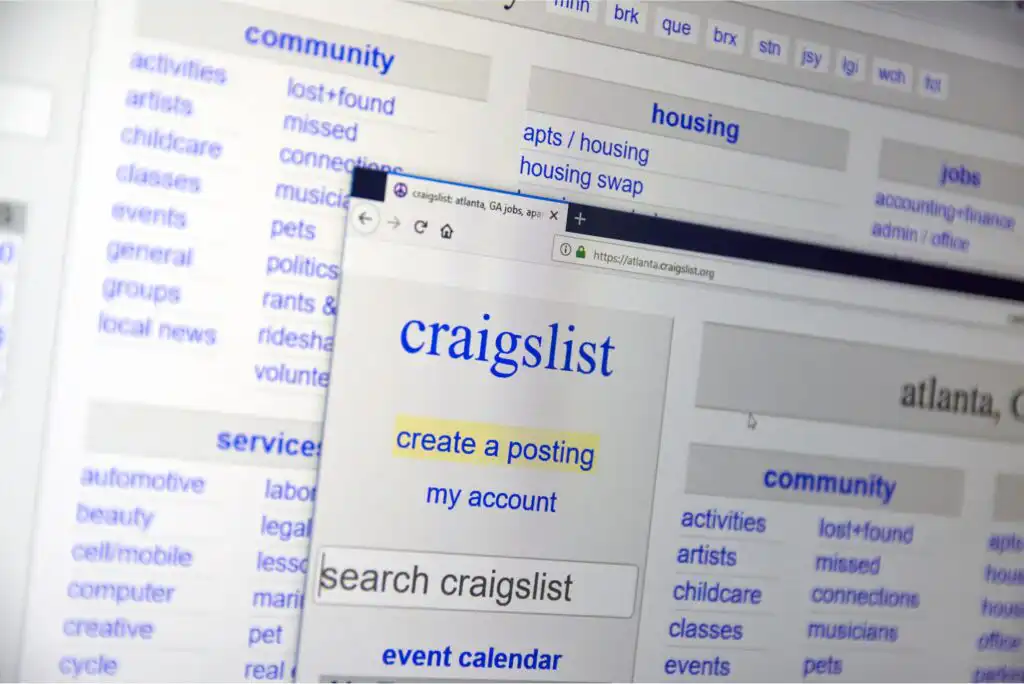

Years ago, I bought a used microwave on Craigslist for $20. Examining the appliance in the trunk of the seller’s minivan, I saw that it was relatively new, reasonably clean, and still had its rotating interior plate. Score.
Then I got home, plugged in my new purchase, and heated up a frozen burrito. Or tried to heat up the burrito.
The microwave lit up, buzzed, and spun its little plate, but the wrap remained cold, mocking me in its icy indifference. I admitted defeat, drove to the nearest big-box retailer, and bought the cheapest new microwave they had.
That’s the only time I’ve been ripped off by a Craigslist seller, for which I consider myself fortunate. Many buyers on peer-to-peer (P2P) marketplaces like Craigslist and Facebook Marketplace experience far more significant financial loss, and a tiny but impossible-to-ignore minority suffer physical duress or harm at the hands of unscrupulous sellers.
As a buyer, it’s vitally important that you understand how to protect your financial and personal safety on these P2P sales platforms.
How to Avoid Scams and Stay Safe on Craigslist, Facebook Marketplace, and Other P2P Platforms
Buyers aren’t blameless, of course. Unscrupulous purchasers readily prey on honest folks trying to sell their stuff on P2P marketplace sites and apps too.
Whichever side of the sale you’re on, you need to know how to ensure your financial and personal safety — which are often related — when using Craigslist, Facebook Marketplace, and other lightly regulated platforms like Nextdoor and OfferUp.
These tips and tricks will help you do just that. All are relevant for buyers and sellers using lightly regulated P2P marketplaces.
Some also apply to general retail marketplaces with P2P sales components — like eBay, Amazon, or Etsy — and to marketplaces that focus on specific niches like clothing (Poshmark, thredUP) or electronics (Gazelle, Swappa), most of which offer more buyer and seller protections than Craigslist and its ilk.
1. Understand Your Recourse Before Completing a Transaction and Take Advantage of Purchase Protection When Offered
Craigslist infamously offers no guarantees or recourse for buyers or sellers. The burden is on the platform’s users to avoid getting scammed.
By contrast, Facebook Marketplace does provide some limited user protections. Facebook Marketplace transactions that use the platform’s internal checkout and shipping tools are automatically covered by its free Purchase Protection feature.
Purchase Protection allows Marketplace buyers to request refunds through Facebook when their orders:
- Never arrive
- Arrive damaged or in significantly different condition than described
- Are not refunded as stated in the seller’s refund policy
- Were not authorized
- Were made through a vendor later removed from Facebook
Purchase Protection is not a guaranteed refund. After investigating, Facebook often resolves disputes in the seller’s favor.
But it’s an important buyer protection that justifies using Facebook’s internal checkout and shipping tools — and sticking only to sellers that offer Facebook checkout and shipping.
2. Use a Major Credit Card That Allows Transaction Disputes
Professional sellers and even some sellers who use P2P marketplaces solely for side income often accept credit cards, often through low-cost intermediaries like PayPal or Square.
When you encounter P2P sellers that accept credit cards, take them up on the offer, even if they pass on the processing charge (typically 2% to 4% of the total transaction value).
Why pay more to use a credit card instead of electronic cash transfers via Venmo or Zelle, or actual hard cash? Because major credit card issuers allow users to dispute fraudulent, unauthorized, or otherwise unsatisfactory transactions.
For example, if I’d used a credit card to buy my nonworking Craigslist microwave, there’s a good chance I’d have received a refund from my credit card issuer if I had bothered to fight the charge.
Like Facebook Marketplace’s Purchase Protection feature, the credit card dispute process isn’t a guaranteed refund. Issuers often resolve disputes in the merchant’s favor. And the process can take weeks to produce a definitive result.
Still, it’s a nice backstop to have.
3. Use Internal Messaging Tools to Communicate
Most P2P sales platforms offer internal messaging tools for buyers and sellers to communicate.
Craigslist has an email tool that handles transaction-related messages; Facebook Messenger is the natural means for Facebook Marketplace users to get in touch, haggle, and hash out meeting or shipping details.
These tools aren’t merely convenient. By creating a neutral record of events leading up to the transaction, they can help the parties argue their case if things go wrong and (for example) the buyer files a Facebook Marketplace Purchase Protection claim or credit card transaction dispute.
A voice call doesn’t establish the same record.
4. Don’t Use Your Real Email Address (And Think Twice About Giving Out Your Phone Number)
Internal messaging tools also help protect buyer and seller privacy and data security. Craigslist’s email tool masks users’ real email addresses so that other parties to the transaction see only a nonsensical string of numbers and letters.
Facebook Marketplace and Nextdoor don’t hide users’ identities by default, and users’ messaging communications are associated with their actual Facebook or Nextdoor profiles — which, in Nextdoor’s case, are identity-verified.
However, neither platform shares email addresses by default, making it easy for parties to keep them private. In each case, there’s no way for an unscrupulous buyer or seller to add the other party to their spam list or harass them directly once the transaction is complete.
It’s more difficult for parties to in-person transactions to avoid giving out their phone numbers since the meeting process often involves a flurry of text messages or calls
Parties concerned about giving out their real phone numbers and exposing themselves to spam calls or texts should use a free Google Voice “burner” number that routes through their regular cellphone and expires after 30 days.
5. Never, Ever Wire Money to a Seller or Accept Wire Transfers As a Buyer
Many Craigslist scams, and scams victimizing users of other lightly regulated P2P marketplaces, involve wire transfers.
The details of such scams vary widely, so the best course of action is simply to take at face value Craigslist’s own guidelines about wire transfer transactions: “Never wire funds … anyone who asks you to is a scammer.”
6. Use Caution With Facebook and Nextdoor Sellers With No Profile Photo
Not everyone who chooses not to display a genuine profile photo on Facebook or Nextdoor — or any social network, for that matter — is automatically suspect.
However, it’s appropriate to subject such users to additional scrutiny when they’re offering to do business with you.
This caution covers buyers or sellers whose profile photos feature nonhuman objects or animals and those with no profile photo at all. Especially when coupled with other red flags like refusing to meet in person or insisting upon using a middleman, refusal to share one’s likeness strongly suggests funny business.
7. Learn to Spot Fake Facebook Profiles
Just as a missing or uninformative profile photo isn’t smoking-gun proof of a scam, a seemingly normal profile photo — namely, one that clearly shows the person’s face — is no guarantee that the profile owner is on the up and up.
Plenty of apparently legitimate social media profiles fail to hold up to closer scrutiny. Proceed with caution if your counterparty’s profile displays any of these warning signs:
- Few or no friends
- Lots of friends with thin profiles
- Relatively few friends in their home country
- Little newsfeed or posting activity
- A history of posting spammy content, such as links to gambling or pornography websites
- A profile photo that shows up under a different name in a reverse image search
- A stated home city far from where the person tells you they are
Hardened Facebook Marketplace scammers use fake profiles to escape consequences for ripping people off. When a victim complains, they simply ditch the profile they’ve been using and move on to the next one.
And because there’s no legitimate reason for an honest buyer or seller to use a fake profile, it’s always wise to avoid doing business with one.
8. Avoid Deals That Seem Too Good to Be True or That Come With a “Craigslist Guarantee”
“Avoid deals that seem too good to be true” is sound life advice anyway. In the context of online P2P marketplace transactions, “too good to be true” can mean:
- Merchandise priced far below the going rate for comparable products in similar condition
- Improbable value enhancements, like a seller offering to double the order quantity for free
- Voluntary offers that involve great inconvenience, such as a seller offering to personally deliver a car halfway across the country
Likewise, any mention of a “Craigslist guarantee” is a giant red flag that should immediately disqualify the transaction. Craigslist doesn’t guarantee transactions and explicitly warns buyers that any representations to the contrary are hallmarks of a scam.
9. Avoid Sellers Who Change the Deal
The line between an outright scam and a bad deal isn’t always clear. As a buyer, there’s no point in trying to find it. Better to walk away at the first sign that a seller is trying to take advantage of you than find out just how far they’ll go.
Avoid sellers who:
- Raise the price at the last minute, no matter what excuse they use — getting a higher offer is a common one
- Claim at the last minute that the item originally on offer has been sold or is no longer available and offer a “similar” replacement
- Say they need to hear back from other buyers before moving forward
- Say they don’t yet have the item in their possession
- Insist that a middleman or “friend” handle their side of the deal
Honest sellers are common enough that you shouldn’t need to deal with sketchy ones.
10. Always Deal Locally Unless Using a Secure, Traceable Checkout System
Like “never wire funds,” “always deal locally” is a timeworn Craigslist shopping tip.
Unless you’re dealing with a professional seller and using a secure, traceable checkout system like Facebook Marketplace’s checkout tool or a major credit card, you should never pay in advance for items the seller claims they will mail.
Instead, meet in person and exchange payment and goods at the same time.
11. Don’t Click Links in Emails Sent by Sellers or Buyers
This tip is less about avoiding a ripoff today than about preventing identity theft tomorrow.
While not as common as run-of-the-mill seller and buyer scams, cybercriminals do use P2P marketplaces like Craigslist and Facebook Marketplace to deliver malware to unsuspecting users.
12. Don’t Use an Escrow Site Suggested by the Seller
Many P2P marketplace users rely on escrow sites to securely broker higher-value transactions, such as automotive or appliance sales.
In exchange for a small cut of the transaction value, these sites hold buyers’ funds until the seller has delivered the merchandise, reducing the risk that a scammy seller will disappear with upfront payment.
Legitimate escrow sites perform a valuable service. Unfortunately, not all escrow sites are legitimate.
One of the most common P2P marketplace scams finds the seller requiring the buyer to use an illegitimate escrow site built not to process transactions but to steal unsuspecting buyers’ money.
To be safe, never use a seller-suggested escrow site, even one that sounds very similar to a site you know to be legitimate. (It’s common for scam sites to mimic legit sites’ names to foil unattentive buyers.)
Counter with a site you know to be legitimate or walk away from the transaction altogether.
13. Examine Merchandise Before Agreeing to the Sale (Don’t Pay Upfront)
It bears repeating: Never, ever agree to pay upfront for P2P marketplace merchandise unless you’re using a traceable intermediary, such as Facebook Marketplace’s checkout tool, that offers buyers some recourse.
If possible, examine merchandise in person before agreeing to a sale — and come to the meeting prepared to walk away. For unique items like event tickets or collectibles and higher-value items like cars, always request proof of purchase, ownership, or authenticity.
Again, be prepared to walk if the seller can’t or won’t provide it.
14. Insist on a Secure Payment Method
Personal checks can bounce. Bank checks, cashier’s checks, and money orders can be forged. Wire transfers—are wire transfers.
As a seller on Craigslist or Facebook Marketplace, your risk of financial loss is greatest at the point of sale. To protect yourself, insist on a secure payment method that can’t easily be faked or reversed — namely, a P2P transfer app like Venmo or PayPal or cold, hard cash.
If you accept cash, be sure to have a counterfeit detection pen on hand. A five-pack will set you back less than $10 and could prevent a far greater loss.
15. Meet in a Public Place With Others Around
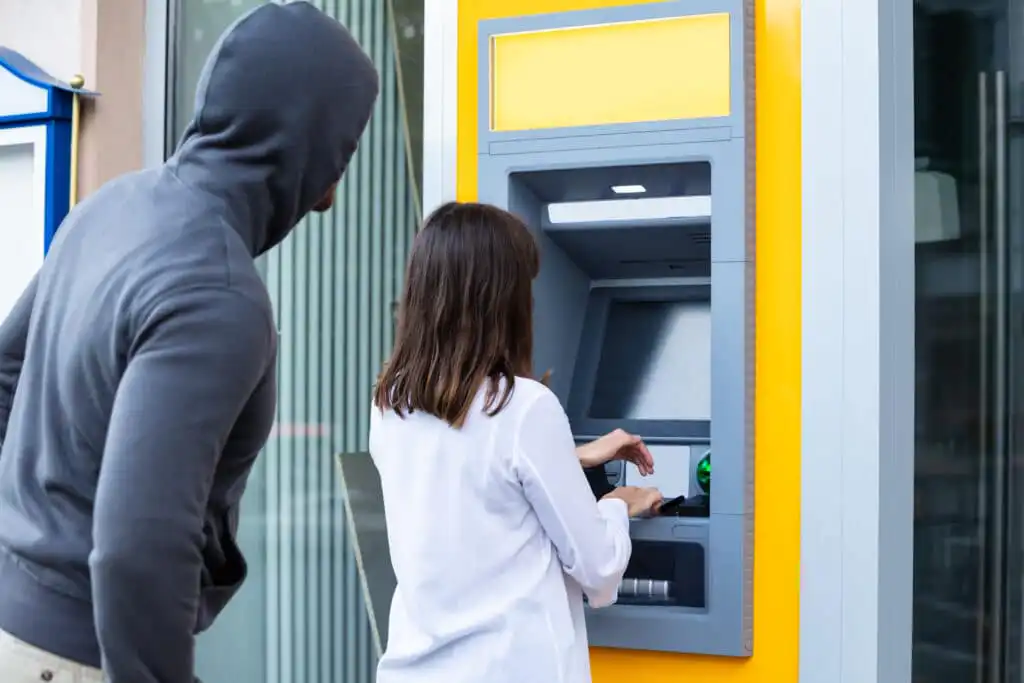
To reduce your risk of physical or financial harm, always meet your counterparty in a well-lit, well-trafficked public place, like a coffee shop or supermarket parking lot.
Don’t meet at your home or a secluded public place, and don’t get into a car with your counterparty — even your own car — to complete a transaction.
This is especially important for buyers in larger cash transactions where the “seller” or their associates have ill designs on the funds.
16. Inform a Trusted Friend or Family Member of Your Plans (Or Bring a Companion to the Meeting)
If you’re at all concerned about meeting a stranger to consummate your P2P marketplace deal, bring a companion to the meeting. This will significantly reduce — although not entirely eliminate — your risk of being physically harmed or robbed.
Even if you don’t feel the need to bring along a friend, inform another person — someone you trust — of your plans, spelling out in detail where and whom you plan to meet.
If you’re robbed or otherwise victimized, this person can corroborate your account to the police and may assist in the recovery of any stolen funds or possessions.
17. Know the Location of the Nearest Police Station (Or Do the Deal There)
If the department allows it, consider doing higher-value transactions in the lobby or parking lot of a police station, where the risk of trouble is vanishingly small.
If your local law enforcement agency isn’t amenable, do the deal in a public place close to a police station, where police response times will be shorter, and mentally note its location.
18. Bring Your Cellphone and Turn on Location Services
Don’t forget to bring your cellphone to the handoff. If nothing else, you’ll need it to coordinate with your counterparty, and you’ll want to have it on hand to call the police if things go wrong.
Make sure your phone’s location services beacon is turned on as well so that it’s easier to find if you’re relieved of it and its location data is useful to any criminal investigation that follows the incident.
19. Report Scammers to the Sales Platform — and to Law Enforcement When Warranted
Finally, don’t hesitate to report known scammers to the platform you found them on, or flag their postings in Craigslist’s case.
Do this even if the financial harm or inconvenience doesn’t seem to justify the effort. There’s no reason for other unsuspecting buyers or sellers to endure what you did.
For more serious offenses, such as theft or ripoffs worth hundreds or thousands of dollars, consider filing a police report as well. Report scams that seem to be organized or occurring at scale to the FBI, which investigates interstate and international cybercrime.
Final Word
Online marketplaces like Craigslist and Facebook Marketplace are fertile ground for scammers and dangerous territory for unsuspecting consumers and small-time sellers.
To better protect your personal and financial information in these settings, Craigslist recommends three legitimate online personal safety resources operated or sponsored by national governments or business alliances:
- OnGuardOnline, a service of the Federal Trade Commission that offers general information about staying safe and avoiding financial scams online
- Get Safe Online, a U.K.-based resource that offers general online safety information applicable to users of U.S.-based P2P marketplaces
- The National Cybersecurity Alliance, which offers a wealth of information to help Web users protect their personal information and identities
Use these resources and this guide to inform your instincts and reduce your risk of being taken advantage of when buying and selling online. While you can’t completely avoid scammers online, you can certainly cut things off before any real harm results.

Editorial & Advertiser Disclosure: The editorial content on this website is not provided, commissioned, reviewed, approved, or otherwise endorsed by any advertiser. Opinions expressed are ours alone, not those of any advertiser. The offers that appear are from companies from which we may receive compensation. However, this compensation does not impact where and how these companies are mentioned on the site. We do not include all companies or all available offers in the marketplace.
Related: