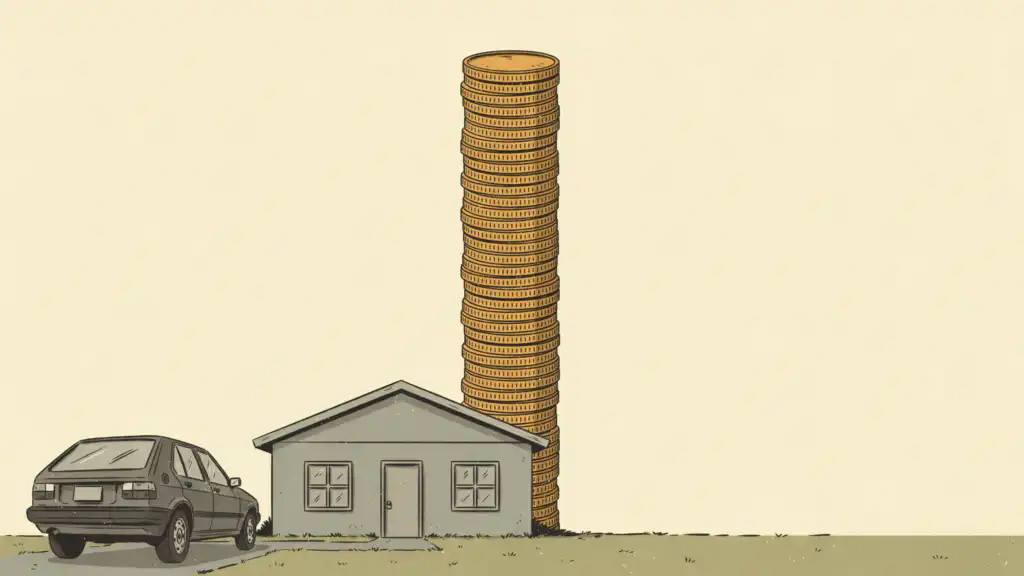

An income portfolio lets interest, dividends, and real estate payouts cover part of your spending, so you rarely need to sell. Build yours from high-quality bonds, dividend stocks, and real estate investment trusts, with enough in stocks for the income to outgrow inflation. To fill any gap, sell a few shares rather than chase a higher yield.
A $500,000 portfolio yielding 4% pays about $20,000 a year without selling a share. Stretching it to 7%, or $35,000 a year, takes riskier holdings.
High-quality bonds can’t get you there. On Nov. 13, ICE BofA’s index of investment-grade corporate bonds, from companies with higher credit ratings, yielded 5.98%, and its index of junk bonds, from companies with lower ratings, yielded 8.20%. With high-quality corporate bonds paying about 6%, a 7% portfolio leans on junk bonds or on stocks whose dividends are at risk of a cut.
Each income source has its own catch. Bond prices fall when interest rates rise. A company that pays dividends can raise them faster than inflation, but it can also cut them when profits fall. Real estate investment trusts (REITs), which own and rent out property, yielded 3.77% at the end of October, the industry group Nareit reports. Like bond prices, REIT prices tend to fall when rates rise.
Most bonds pay the same interest until they mature, so the mix needs dividend stocks too. At 3% inflation, $20,000 a year of bond interest buys about a quarter less after 10 years.
Where you hold each one changes how much of its income you keep. Interest from Treasuries and corporate bonds is taxed at your regular income tax rate, and the SEC notes that REIT dividends generally are too. Hold those bonds and your REITs inside an individual retirement account (IRA), where nothing is taxed year by year. Keep dividend stocks in a taxable account, where the IRS taxes qualified dividends at its lower capital gains rates.
Rather than chase yield, use the total-return approach for the spending your payouts don’t cover. Pick the percentage of the whole portfolio you’ll spend each year, and sell shares to make up the difference. Keeping a few years of that spending in cash and short-term bonds stops a market drop early in retirement from forcing a sale.
Hold the mix in an IRA and a taxable account at one of the best online brokers.


Subscribe and we'll send you 101 Essential Money Tips to get you started.
The 101 money moves that matter most, from the foundations to protecting what you’ve built.
Advertiser Disclosure: Many or all of the offers that appear on this site are from companies that compensate us, and some companies pay for sponsored content. That compensation may influence which products we cover and where and how they appear on a page, including the order in which they appear. We do not include every company or offer available in the marketplace.