

We all have habits we frequently indulge. A daily morning latte or occasional new pair of shoes can seem harmless. But consider their effect on your bottom line.
Even the tiniest regular purchases of $1 or $5 add up. And despite your efforts in other areas, they could be one of many reasons you’re still mired in debt.
Those experiencing chronic debt problems often share similar behaviors and financial habits. But if you catch them early, you can avoid trouble.
And even if you’re already in the red, recognizing and adjusting these bad money habits can help you get back on track.
Bad Financial Habits You Need to Break to Get Out of Debt
Debt is a huge factor holding many Americans back. According to the New York Federal Reserve’s Quarterly Report on Household Debt and Credit, Americans had $14.64 trillion in total household debt in the first quarter of 2021.
Thankfully, the same report showed that credit card debt has dropped by $157 billion since the end of 2019. Still, the average household had $5,315 in credit card debt in 2020, according to Experian.
Often, it’s a set of consistent habits that sets those prone to debt apart from those who stay in the black. By watching out for these behaviors, you can stop some of those bad habits and reassess the way you think about and approach debt.
1. Impulse Buying
Are you the type to snatch up something whether it’s on sale or not, even if you didn’t plan the purchase? That kind of impulse buying can lead to a series of unsound spending behaviors, such as:
- Justifying Unplanned and Poor Purchasing Decisions. It’s easy to convince yourself you need an expensive bag or new gadget and allow yourself to overspend by finding reasons it makes sense.
- Using Your Credit Card for Impulse Purchases. Because impulse shopping is unplanned, you may not actually have the funds to cover costs. That means you’re using credit to purchase things you can’t afford.
- Losing Track of Your Budget. Even the most diligent budgeter can mess up now and again. But impulse spending causes you to lose sight of your budget and financial goals. And when you decide you’ve already blown your budget, sometimes, you just keep swiping that card, which is a slippery slope.
While an impulse buy here or there doesn’t usually leave a lasting impression on your finances, making it a habit can seriously derail your goals. Develop a plan that helps you cope with that irritating itch to spend without thinking.
University of Connecticut School of Medicine psychiatry professor Julian Ford suggests in an article for Psychology Today that you develop a mantra to help you remember your goals. For example, your mantra could be, “I only buy what I need.”
Before you make a purchase, stop, think of your mantra, and walk away. If it’s something you need, it’s still going to be there in a few days.
2. Using Credit Cards for the Points
Not all rewards credit cards are evil. When used responsibly, some have their place in your wallet. But there’s a reason credit card companies offer those rewards, and it’s not out of generosity. Rewards encourage you to spend more.
A 2021 study by MIT’s Sloan School of Management showed researchers what happened in people’s brains at the moment they purchased something. Using fMRI technology (a type of imaging), they compared brain reactions to cash purchases versus credit card purchases.
Researchers already knew people generally spend more with credit than cash but weren’t sure of the reason. The study observed whether overspending on credit cards was due to the ease of using credit cards or because it activates reward centers in our brains, driving a craving to spend.
Results revealed credit card spending was higher than cash due to the latter — it just makes us happy.
And credit card rewards could prompt you to spend even more. It’s the old “the more you buy, the more you save” scheme advertisers have used to prey on consumers for decades.
And you might score a little cash back on that purchase, but many cards impose heavy restrictions. Some cards cap annual reward totals or limit the top cash-back rates to certain purchases (such as gas and groceries).
Unless you use them thoughtfully, credit card rewards are often less rewarding than you think. Going deeper into debt in pursuit of credit card points isn’t worth it.
If you find yourself in credit card debt, move your balance to a card with a lower APR. It can help reduce the amount you’re paying in interest each month.
3. Keeping Up With the Joneses
Real estate agents often say that it’s better to be the worst house on the best street than the best house on the worst street. But when your neighbors seem to have it all, the drive to be the best house on the best street can overshadow your debt-payoff goals.
Psychologists call the relentless drive to keep up with the Joneses “conspicuous consumption.” Anytime you purchase something you otherwise wouldn’t to impress someone else or make yourself look more successful, you’re displaying what they call “wealth signals,” according to Intuit’s MintLife. And buying solely to signal wealth or status can cause you to overspend.
While some people don’t care about measuring up to others, it can be a real challenge for others. And Kansas State University’s Sonya Britt, assistant professor and program director of personal financial planning, tells MintLife that TV, the Web, and social media don’t help.
Now we see our neighbors’ new purchases in addition to being bombarded with ads and following hundreds of people’s social media pages and knowing instantly about their new motorcycle, vacation to the Maldives, or home remodel.
But success is hard to measure from the outside. When you see a neighbor pull up in a shiny new car, remember you don’t know that person’s financial situation. They may have taken out a massive car loan they’ll be paying off for nearly a decade. Or they’re completely ignoring the fact that retirement is looming.
It’s helpful when you feel envy or a desire to prove your worth to remind yourself of your priorities and goals. Paying off debt or saving for retirement is more important than impressing someone you barely know. Improving your credit score by lowering debt can benefit you in numerous ways.
No one can see your retirement account balance, but you know that by maxing out your 401(k), you’re working to have enough money and secure a comfortable future, which is worth far more than any status symbol you can buy.
4. Shopping to Boost Your Mood
Raise your hand if you’ve ever gone on a mood-based spending spree. If you have, you’re not alone. There’s a reason we often call it “retail therapy” — shopping can feel like just the relaxing break you need from the stresses of life and work.
Unfortunately, spending money to feel good can become a habit. San Francisco State University assistant professor of psychology Ryan T. Howell writes in Psychology Today that shopping repetitively or compulsively can result in continued shopping, regardless of “harmful emotional, social, and financial consequences.”
So the more frequently you shop after a tough day, the more likely you are to turn to shopping the next time. Shopping to boost your short-term mood creates a link between happiness and buying material goods. And it’s a link that can be hard to break.
Howell suggests checking your emotions before you buy as a way to stop emotional shopping. Before you hand over your credit card, think about why you’re making the purchase. Is it because you need it or because you’re sad or bored?
If you can’t get your emotional spending under control, seek out professional help. Shopping addiction is real and can be challenging to manage, but with the help of a dedicated mental health professional, you can learn your triggers and find coping mechanisms to help get you out of debt and stay that way.
It’s not that all shopping is bad. But while you’re working on getting out of debt, buying things for the fun of it only keeps you in debt longer. So when you go on a shopping trip, find ways to save money.
For example, apps like Ibotta and Drop can help you save on nearly every shopping trip you make. Plus, shopping online through Rakuten can help add cash back to your wallet as well.
Another popular strategy for kicking emotional spending to the curb is giving yourself a waiting period. For example, if you delay any nonessential purchases by at least 48 hours, the urge to buy often subsides after the thrill of the moment has worn off.
5. Spending on Convenience
Overspending for the sake of convenience is a common trap. It’s hard to get out of debt if you’re constantly buying things like takeout meals when you can make your own meals at home for a fraction of the cost.
A certain amount of convenience is sometimes necessary for your schedule. But for the sake of paying down debt balances, examine all your spending to find areas where you can cut back.
It’s a challenge to take control of your spending habits. Don’t expect to become a different person instantly. There’s an adjustment period. But are you buying restaurant lunches every weekday instead of brown-bagging it? Do you need to buy your morning coffee at Starbucks, or can you switch to homemade brews?
Reducing your most significant expenses is crucial, and there are flaws in the latte factor theory. Still, there are likely dozens of smaller purchases you could reflect on and find a less expensive option.
Consider costs including food, entertainment, clothing, house cleaning, and car repair. You probably can’t DIY everything, but many people are surprised by how capable they are when they try. Debt freedom is possible.
6. Excessive Lifestyle Inflation
We all expect a particular life progression: Start at a modest introductory salary, then gradually earn more money as we gain experience. Improving your financial status through career shifts and raises can happen.
But there’s a difference between those who are regularly in debt and those who control their finances. Perpetual debtors increase their spending every time they increase their income.
Lifestyle inflation means every influx of cash goes out the door in a flash. Scoring a raise or higher-paying job doesn’t do much to improve your finances if you instantly raise your spending to that new level of income. The habit of spending all your raises keeps you trapped in a debt cycle and prevents you from building wealth.
For example, let’s say you earn $60,000 per year and get a new position paying $75,000. If you immediately buy a $15,000 car, the increase in salary doesn’t do much. But if you manage your money carefully and funnel the additional income into paying off debt, you’ll be better off.
Lifestyle inflation can be a natural part of earning more and moving up the chain at work. But it’s only acceptable if you’re spending within your means. As soon as you start going into debt to afford a certain lifestyle, it becomes problematic.
Spend what you can afford to maintain your valuable financial freedom.
7. Ignoring Your Debt
You know how children like to stick their fingers in their ears and shout, “I can’t hear you!” when someone tells them something they don’t like? That’s basically what you’re doing if you know you’re in debt but refuse to do anything about it.
Those who tend to ignore their debt may engage in the following red-flag behaviors:
- Avoiding phone calls from creditors and collection agencies
- Ripping up bills and statements without opening them
- Becoming visibly uncomfortable, defensive, or angry when they have to discuss their debt
- Not knowing how much debt they carry
If that’s you, you’re not alone.
But pretending your debt doesn’t exist doesn’t help. And denial causes even more damage than you started with. It’s a lot like when you ignore symptoms of illness. Early treatment can help, but delayed treatment could make your condition worse.
Astronomical late fees and interest charges, dealing with collection agencies, and falling deeper into debt are all consequences of taking an out-of-sight, out-of-mind attitude toward what you owe. It’s dangerous and perpetuates the cycle of harmful behavior.
Get into the habit of opening your mail or digital account statements when you feel calm and ready. Knowledge is power, and the more you know about your debt, the better prepared you can be to face it.
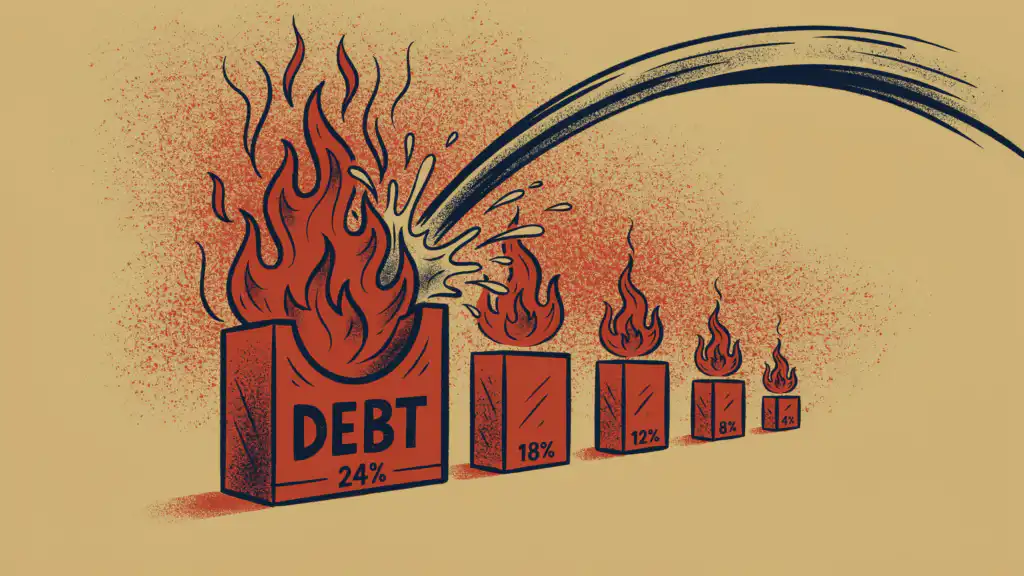
Once you know how much you owe, create a budget including payment plans for each debt. If you owe a lot to multiple creditors, pay your utility bills and fixed bills first and then focus on the account with the smallest balance. It’s called the “debt snowball” method.
For many people, it can feel more achievable, and taking small steps forward works wonders. You feel like you’re making progress, which gives you the boost necessary to move onto the next balance.
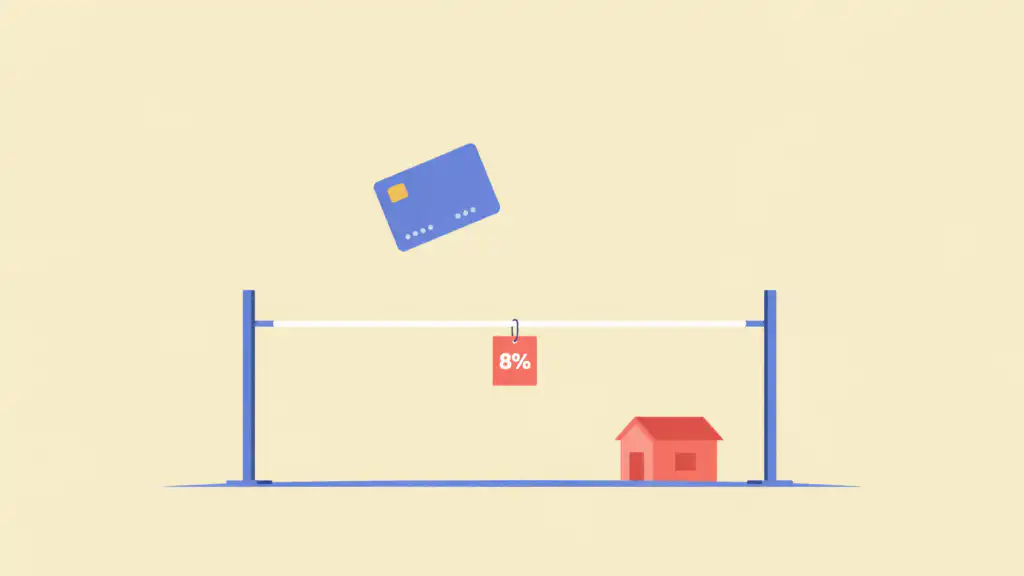
The interest you pay on your debt each month can be a little frightening. A personal loan from a company like SoFi can ease the burden of payments.
As of August 2020, the average interest rate for U.S. credit cards was 14.58%, as reported by Forbes Advisor. Generally, the lower your credit score, the higher the interest rates you typically receive.
By using a personal loan, you can potentially cut that in half, depending on your creditworthiness.
8. Not Following a Budget
A crucial cornerstone of both getting and staying out of debt is following a budget. It doesn’t sound like fun to plan and look back on every purchase. But budgeting is a proven strategy for money management.
Much like people who struggle with weight management sometimes benefit from tracking their calories, those who struggle with money management can benefit from tracking their money.
If you don’t know how to make a budget, there’s no time like the present to learn. Total how much you earn monthly and then calculate your monthly expenses, including both fixed expenses and variable expenses.
Fixed expenses are those at a set monthly or annual amount, such as rent or mortgage payments, insurance premiums, and car payments. Variable expenses are those that fluctuate, such as food, utilities, entertainment, and clothing.
You might have to begin with minimum payments on debt and gradually adjust as you pay down the balances.
Once you’re completely out of debt, your budget can become a lot more enjoyable. And taking a close look at your finances and following a budget gives you a sense of freedom.
You begin to see where you can adjust to fit your priorities, and you realize that responsibly managing your money allows you to spend more freely on things you enjoy.
9. Not Saving Money at All
It can seem counterintuitive, but even if you’re in debt, you need to get into the good habit of saving. It probably feels impossible, especially if your debt balance is enormous.
But everyone needs to put something — even a little bit — into savings, perhaps a high-yield savings account that pays interest.
A savings cushion is essential to building a debt-free lifestyle. If you’re constantly working with only the income you earn each month, you never have anything left for emergencies.
Then what happens if your car breaks down and needs costly repairs? You put the expense on your credit card, repeating the cycle of debt.
The sooner you can build a decent emergency fund you can add to each paycheck, the better equipped you’ll be to handle minor and major emergency expenses.
So while it may be tempting to forego saving entirely while in your debt-payoff phase, you need emergency money to cover unexpected expenses. It helps you avoid falling deeper into debt in the future.
10. Ignoring the Future
A great deal of all personal finance advice comes down to this question: Are you thinking about your future? Do you make financial decisions with the future in mind? If not, you might be sabotaging your efforts at breaking the ongoing debt cycle.
It’s understandable when people struggle to think five, 10, or 50 years into the future if you’re barely scraping by today. If your daily existence is a battle and your debt feels like an unbearable weight, it’s hard to get into a forward-thinking mindset. But it’s crucial you do.
Even while you’re dealing with debt, remember the goals you’d like to accomplish in the future. Think about where you’d like to be in a year. Then look further ahead — three years, five years, and beyond.
It’s OK if some dreams seem out of reach. But those big dreams and goals often drive us to do the hard things like paying down debt.
Make a list of goals to inspire you to get and stay out of debt, such as:
- Buying a house
- Staying home with your children
- Sending a child to college
- Traveling the world
- Retiring early
- Starting your own business
- Giving to charity
Most goals we set, both big and small, require money, and that’s why taking time to evaluate your goals regularly is vital.
Don’t neglect the future because of the stress of today’s debt. Keeping those dreams can help you stay the course when making wise financial choices is tough.
Final Word
We form our habits over years and years of doing the same thing repeatedly. Financial habits like ignoring your debt, impulse buying, and spending to impress others can decimate any attempts to become debt-free.
If your financial life could use a makeover, look to see which of these bad financial habits you’re following. Rather than assuming a fixed mindset that says you’ll be in debt forever, break the cycle
Take charge and start building good money habits. Your debt and financial struggles don’t have to hold you back.

Editorial & Advertiser Disclosure: The editorial content on this page is not provided, commissioned, reviewed, approved, or otherwise endorsed by any advertiser. Opinions expressed here are ours alone, not those of any advertiser. The offers that appear on this site are from companies that compensate us. That compensation may influence which products we cover and where and how they appear on a page – including the order in which they appear – but it does not influence our evaluations, ratings, or opinions. We do not include every company or offer available in the marketplace.
Related: