
I like to think I know more about credit cards than the average person. I’ve written dozens of credit card reviews for Money Crashers and personally tried out more credit cards than I’d like to admit.
So I was surprised and a little embarrassed to learn for the first time recently that the IRS permits taxpayers to make federal tax payments by credit card.
Virtually all individual filers are eligible to pay their year-end taxes by credit card. And freelancers and independent entrepreneurs responsible for quarterly estimated tax payments can pay those with plastic too. With some important caveats, particularly around withholding taxes, business owners are also eligible to pay tax bills on credit. But it’s not as simple as calling up the IRS and giving them your credit card number. There are a few things you need to know first.
Paying Taxes With a Credit Card: Approved Vendors & Costs
Paying your federal taxes by credit card isn’t rocket science. An IRS primer outlines what you need to know about the process.
In virtually every state that collects them, you can pay state income taxes with a credit card as well. Check this nifty cheat sheet from Mastercard for details about individual and business payment portals for state income taxes.
Before we go any further, we should clarify that paying your taxes and paying tax preparation fees are two different things. Tax payments go to the IRS or state tax collectors. Tax preparation fees go to the accountant or service you retain to prepare your taxes. Since taxpayers frequently make these distinct payments simultaneously, it’s understandable when novices get them confused.
IRS-Approved Tax Payment Processing Vendors
Taxpayers willing to file paper returns and forms can choose from three IRS-approved payment processing vendors:
- Pay1040.com: 1.87% of the total tax paid or $2.50 minimum (same fees and minimums for debit card payments)
- PayUSATax.com: 1.85% of the total tax paid or $2.69 minimum ($2.20 minimum for debit card transactions)
- ACI Payments: 1.98% of the total tax paid or $2.50 minimum ($2.20 minimum for debit card transactions)
Note that you don’t need to turn in paper vouchers for quarterly estimated tax payments you make by credit card. All three vendors accept Visa, Mastercard, and American Express plus popular mobile wallet providers.
Taxpayers who prefer to e-file their returns can chose from the same three IRS-approved processors for end-of-year payments, extension payments, and other types of tax payments accompanied by IRS forms.
Check the IRS Frequency Limit Table by Type of Tax Payment for more information on when and how often you can make various types of tax payments.
Paying Taxes With Your Credit Card: Things to Keep in Mind
Note these items before scheduling a credit card tax payment:
- Payment Cancellation. Under ordinary circumstances, you can’t cancel credit card tax payments. Check with the IRS for more details and potential loopholes.
- New Card Sign-Up Bonuses. Before paying your taxes, consider applying for a new credit card with an attractive sign-up bonus offer. The best sign-up bonus cards on the market have bonuses worth $400, $500, even $1,000. The catch: You have to meet a hefty spending threshold within a preset time frame, usually three months from your account opening date. Paying end-of-year or estimated taxes is a great way to accelerate your progress toward the threshold without spending on stuff you don’t really need.
- Federal Tax Liens. If you’re subject to a federal tax lien arising from an unpaid tax liability, tax payments made by credit card won’t automatically release the lien. Speak with the IRS and a tax professional for guidance.
- Paying in Full. Unless you qualify for a 0% APR introductory rate on a new credit card, it’s best to pay off your credit card balance in full by your statement due date. Balances carried from month to month accrue interest at an impressive clip: typically, anywhere from 10% APR to 30% APR or more, depending on your card, creditworthiness, prevailing rates, and other factors. If you use your credit card for lots of other purchases already and suspect you’ll have trouble accommodating the added burden of a three- or four-figure tax payment multiple times per year, look for an alternative tax payment method.
Should You Pay Your Taxes on an Installment Plan?
If you can’t afford to pay your full tax liability right away, but aren’t sure that paying by credit card is the best choice, consider an installment plan instead.
The IRS offers immediate, short-term, and long-term online payment plans. An immediate payment plan is just another term for “pay in full.” Short-term payment plans must be paid off within 180 days of the start date. Long-term payment plans are more open-ended, with monthly payments on an agreed-upon schedule.
You can apply online for a short-term payment plan if you owe less than $100,000 in combined tax, penalties, and interest. You can apply online for a long-term plan if you owe less than $50,000 in combined tax, penalties, and interest, and have filed all relevant tax returns. If you don’t meet these criteria, you may need to apply by mail, phone, or in person.
Setup is free for immediate and short-term plans, and payments cost nothing when you elect to direct-debit payments from a linked bank account. Long-term plans cost $31 to set up with direct debit or $130 to set up with manual payment, plus accrued penalties and fees until the balance is paid off in full.
This sounds pricey, but it’s probably cheaper than putting your entire tax bill on a credit card and paying it off (with interest) over a similar timeframe.
Advantages of Paying Your Taxes With a Credit Card
Key advantages of paying taxes with a credit card include cash flow benefits, the potential to build credit, and eliminating extension form requirements.
Helps With Cash Flow
Like other large outlays, tax payments are financially disruptive. If money is tight throughout the year, sending off hundreds or thousands of dollars to the IRS probably doesn’t help matters.
Putting periodic tax payments on your credit card eases the crunch for weeks or months. Scheduling payments for the beginning of your card’s statement period provides up to four weeks of breathing room.
Taking advantage of a long 0% APR introductory financing offer is even better. Some introductory offers last as long as 21 months.
Potential to Build Credit and Raise Your Credit Score
If your near-term goal is rebuilding your credit after an adverse event, such as bankruptcy, consider applying for a secured credit card and using it as a vehicle for your tax payments.
For ideas, check out our list of the best secured credit cards on the market from top credit card issuers like Citi and Capital One.
Fees May Be Tax-Deductible
If you itemize deductions, you may be able to deduct the convenience fees charged by your chosen credit card payment processor. That’s not trivial: On a $3,000 estimated tax payment, a 2% convenience fee adds up to $60.
The convenience fee deduction isn’t guaranteed, so check with a tax professional before assuming you qualify.
Can Set Your Payment Date Well in Advance
If you tend to file your taxes early, you can delay your payment date for weeks or months when you choose to pay with a credit card. This is another cash flow benefit to paying taxes with a credit card.
Estimated Tax Payments Can Boost Spending Power
Estimated tax payments can dramatically boost your credit card spending power, bringing high-dollar sign-up bonus spend requirements within reach.
These one-time spend thresholds, usually set at three months from the account opening date, frequently reach $4,000 or $5,000. Unless you’ve miscalculated your projected income or experienced an unexpected windfall during the tax year, you probably won’t owe that much when you file. But your quarterly estimated taxes could certainly approach or exceed those figures.
Some travel credit cards have even higher spend thresholds for coveted travel loyalty program windfalls. For suggestions, see our list of the best credit cards to pay your taxes.
Partial Payments Negate Extension Form Requirements
When you partially pay your end-of-year taxes with a credit card, you automatically earn an extension without any additional paperwork required. When you opt for another form of payment, you may be required to file IRS Form 4868. The extension deadline is usually six months after the filing deadline: October 15 or thereabouts.
Disadvantages of Paying Your Taxes With a Credit Card
Paying taxes with a credit card does have some drawbacks, including processing fees, higher credit card balances and credit utilization ratios, and higher fees for integrated e-file and e-pay providers.
Carries a Processing Fee of at Least 1.85%
Every IRS-approved credit card payment processor charges a convenience fee. As of the 2022 tax year, the lowest possible fee is 1.87% with PayUSATax, or $2.50 flat (for smaller payments only) with ACI Payments and Pay1040.com.
These fees are high enough to eat up, and potentially exceed, earnings from most cash-back credit cards, whose returns on general spending typically top out around 2% outside sign-up bonus periods.
Paper check and EFT remain the cheapest tax payment methods for cardholders who don’t expect tax payments to trigger point or mile windfalls via sign-up bonuses or ongoing spending thresholds.
Can Substantially Increase Credit Card Balances and Utilization Ratio
Credit utilization is one of several factors used to calculate your credit score. Your credit utilization ratio is your total aggregate credit balance divided by your total aggregate credit limit.
All other things being equal, a high ratio can adversely impact your score. If your aggregate credit limit (available credit) is on the low side, a large end-of-year or estimated tax payment could spike your credit utilization ratio. In turn, this could temporarily affect your ability to secure new loans or lines of credit on favorable terms.
May Result in Hefty Interest Charges
There’s a good chance you won’t be able to pay off your entire tax bill in a single month. Which means the balance generated by your tax payment will accrue interest unless you’re within a 0% APR introductory period.
Your credit card interest rate will almost certainly be higher than the IRS’s interest rate on unpaid tax balances. On larger balances, this could end up costing you more than setting up an installment plan.
Higher Fees for Integrated e-File and e-Pay Providers
E-filing is faster and more convenient than submitting a paper return. Unfortunately, it’s also more expensive. Returns filed using the IRS’s integrated e-file and e-pay function carry convenience charges that are almost certain to exceed your rewards credit card’s cash-back or point-earning rate.
Employers Can’t Make Federal Tax Deposits
The IRS requires employers that withhold employment taxes to deposit federal tax collections once or twice a month using the Electronic Federal Tax Payment System®. They can’t make these deposits with a credit card.
Though this doesn’t affect individual filers directly, you need to plan accordingly if you own a small business with traditional employees.
When Should You Pay Your Taxes With a Credit Card?
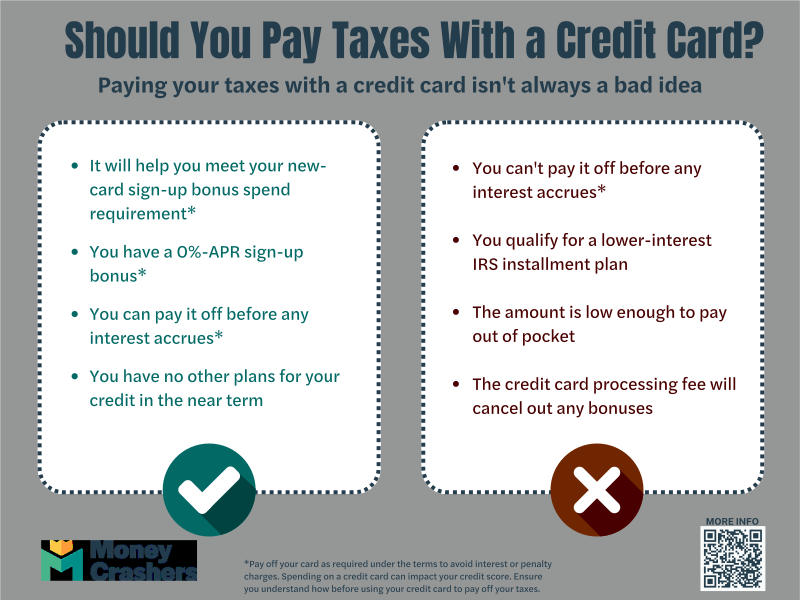
Paying your taxes with a credit card can sometimes work in your favor, but it’s not always the right move. See when you should and shouldn’t do it.
When to Pay Your Taxes With a Credit Card
Paying income taxes with a credit card makes sense in these situations:
- You’re in the qualification period for a new card sign-up bonus. If you owe a significant amount in taxes when you file, or you pay quarterly estimated taxes anyway, your payment could account for a big chunk of the spend required to earn a new card sign-up bonus. Maybe the whole thing.
- You qualify for a 0% intro APR promotion on purchases. If your credit card has a 0% APR promotion, you can carry the resultant balance for many months without paying any interest on it. Just be sure to zero it out before the promotion ends, or you could wind up paying deferred interest.
- You can pay off the charge in full before any interest accrues. Even if you’re not eligible for a 0% APR promotion, you can avoid interest by paying off your charge in full during the grace period. This is more feasible when your tax bill is small and the value of rewards earned on the payment is greater than the processing fee.
- You have no plans to apply for new credit in the near future. Charging a big tax payment to your credit card can spike your credit utilization ratio and temporarily push down your credit score. Both could make it harder to qualify for a mortgage, auto loan, or new credit card.
When Not to Pay Your Taxes With a Credit Card
You shouldn’t pay income taxes with a credit card in these circumstances:
- You aren’t eligible for a sign-up bonus or 0% intro APR offer. If neither incentive applies, the benefit of paying your taxes with a credit card is marginal at best. There’s a good chance you’ll lose money on the transaction, even if you avoid interest.
- You can’t afford to pay off the charge in full before interest accrues. If you can’t avoid interest on the charge, you definitely shouldn’t put your tax payment on a credit card. You’ll end up paying a lot more than you owe.
- You qualify for an IRS installment plan. For bigger tax bills, an installment plan should be your first choice if you qualify. It’s cheaper in the long run than carrying a balance with interest.
- Your tax bill is small enough to pay out of pocket. If your tax bill is manageable enough to pay out of cash on hand — without dipping into your emergency fund or long-term savings — then that’s the way to go. It won’t cost you anything extra.
Your tax bill is big enough for the processing fee to offset a sign-up bonus. On the other hand, if your tax bill is huge, the processing fee could be bigger than any sign-up bonus it qualifies you for. The line depends on the expected bonus value, but as an example, a 1.85% processing fee on a $10,000 tax payment is $185, so you’d need to earn at least that much as a bonus for the payment to pencil out.
Final Word
If you don’t expect to have a major year-end or quarterly estimated tax liability this year, don’t worry. There are plenty of other ways to earn your new credit card’s sign-up bonus offer: making major travel or home improvement purchases in advance, for instance.
Just remember that credit card use is a privilege, not a right. Don’t put yourself in an uncomfortable — and avoidable — financial pickle just to earn a few extra cash back dollars or summit the final hill in your sign-up bonus climb. You could find yourself stuck with the consequences for years to come.
