
Pay a large tax bill with a new card whose sign-up bonus your payment earns, such as the Capital One Venture, since that bonus is worth far more than the card processing fee. A no-fee 2% card beats the cheaper IRS processor’s 1.75% fee by only $25 per $10,000, so save it for payments after the bonus.
The IRS takes card payments through two processors, Pay1040 at 1.75% of the payment and ACI Payments at 1.85%, each with a $2.50 minimum for a personal credit card. The cards below beat those fees with a sign-up bonus that one large payment can earn, or with a rate above them on every payment.
Pay the card off by its due date unless it charges 0% on new purchases. At an 18% yearly interest rate, a month’s interest on the balance is 1.5%, six times what a 2% card nets after Pay1040’s fee. And check that your card counts a tax payment as a purchase. None of the cards below excludes taxes in its rewards terms, but the Robinhood Gold Card’s rewards rules name taxes and government services among payments that may not earn points.
Sign-up bonuses a large tax payment can earn
Each charges $95 a year, and one tax payment can cover the spending its bonus requires, so the bonus makes up most of what that payment earns.
Best overall: Capital One Venture Rewards Credit Card

For a traveler with a big tax bill, it earns 2 miles per dollar, $200 toward travel on a $10,000 payment, $25 more than Pay1040’s $175 fee even without the bonus.
- What Sets It Apart: Flat 2X miles everywhere; transfers to 22 airline and hotel programs, most at one to one
- Welcome Offer: 75,000 miles after $4,000 in purchases in 3 months
- Rewards: 5X on Capital One Travel reservations for hotels, vacation rentals, or rental cars; 2 miles per dollar on every purchase
- Features: A one-time $300 Capital One Travel credit for hotels and vacation rentals in year one; up to $120 every 4 years for Global Entry or TSA PreCheck
- Annual Fee: $95
- APR: 19.74%, 24.74%, or 28.74% variable
- Cost: No foreign transaction fee
- Credit Needed: Excellent, as Capital One lists it
- Pros: No bonus categories to track; a first-year offer worth up to $1,050 toward travel; transferred miles worth more than a cent each on awards that cost fewer miles than their cash price in cents
- Cons: 2X beats the no-fee VentureOne’s 1.25X after the fee only past about $12,700 a year; no airport lounge access; 5X and the $300 credit only on Capital One Travel bookings
For more information, read our full Capital One Venture Rewards Credit Card Review.
Best for the bonus alone: Chase Sapphire Preferred® Card

It earns 1 point per dollar on a tax payment, $100 on $10,000 and $75 short of Pay1040’s $175 fee, so it suits a taxpayer whose payment earns the bonus.
- What Sets It Apart: A $100 annual Chase Travel hotel credit that covers the $95 fee, plus transfers to airline and hotel programs
- Welcome Offer: 75,000 points after $5,000 in purchases in 3 months
- Rewards: 5x on Chase Travel; 3x on dining, gas, EV charging, streaming, and online grocery
- Features: Up to $120 every four years for Global Entry, TSA PreCheck, or NEXUS
- Annual Fee: $95
- APR: 19.49% to 27.74% variable
- Cost: No foreign transaction fee
- Pros: $100 hotel credit exceeds the $95 fee; primary rental car coverage; trip cancellation and trip delay coverage
- Cons: Credit only on Chase Travel hotel bookings, which usually earn no hotel loyalty points; 1x on non-bonus purchases; Points Boost limited to select bookings; no intro APR
For more information, read our full Chase Sapphire Preferred® Card Review.
Best for BofA customers: Bank of America® Premium Rewards® Credit Card
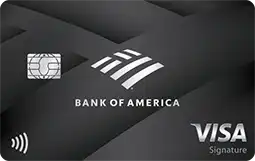
A customer with $100,000 at Bank of America and Merrill gets a 50% BofA Rewards boost, which lifts the card to 2.25 points per dollar, $225 on a $10,000 payment against Pay1040’s $175 fee.
- What Sets It Apart: Up to $100 a year in airline fee credits against a $95 fee; up to 75% more points for Bank of America’s biggest customers
- Welcome Offer: 60,000 points after $4,000 in purchases in the first 90 days
- Rewards: 2 points per $1 on travel and dining; 1.5 points per $1 on everything else; 10% to 75% more points through BofA Rewards; points worth 1 cent each as cash
- Features: Up to $100 every four years for TSA PreCheck or Global Entry; trip delay, cancellation, and lost luggage coverage
- Annual Fee: $95
- APR: 19.74% to 27.74% variable
- Cost: No foreign transaction fee
- Pros: Airline credit more than covers the fee; 3 points per $1 on travel and dining with $100,000 in balances; points don’t expire while the account is open
- Cons: 1.5 points per $1 on everyday purchases without BofA Rewards; no airline or hotel transfer partners; no airline credit for tickets or on Allegiant, Spirit, or Sun Country
For more information, read our full Bank of America® Premium Rewards® Credit Card Review.
No-fee cards paying 2% on every payment
Each pays 2% with no annual fee, so a $10,000 tax payment returns $200, $25 more than Pay1040’s 1.75% fee and $15 more than ACI Payments’ 1.85%.
Best for smaller tax bills: Citi Double Cash® Card
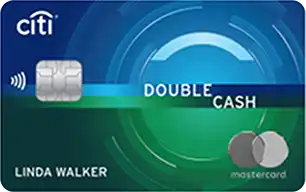
Choose it for cash back on a smaller tax bill, since a single quarterly estimated payment can cover the spending its bonus requires.
- What Sets It Apart: 2% on everything, half when you buy and half when you pay; 18 months at 0% on balance transfers
- Welcome Offer: $200 bonus after $750 in purchases in 3 months
- Rewards: 5 points per $1 on Citi Travel hotels, car rentals, and attractions; 1% on each purchase plus 1% when you pay for it; points worth 1 cent each as cash
- Features: Cash redemptions in any amount, by statement credit or direct deposit
- Annual Fee: $0
- Intro APR: 0% interest for 18 months from account opening on balances transferred in the first 4 months
- APR: 18.49% to 28.74% variable
- Cost: 3% balance transfer fee ($5 minimum) in the first 4 months, then 5%; 3% foreign purchase fee
- Pros: No categories or caps; long balance transfer intro
- Cons: No intro APR on purchases; 3% foreign purchase fee; purchases accrue interest while a transferred balance remains
For more information, read our full Citi Double Cash® Card Review.
Best for paying over time: Wells Fargo Active Cash® Card
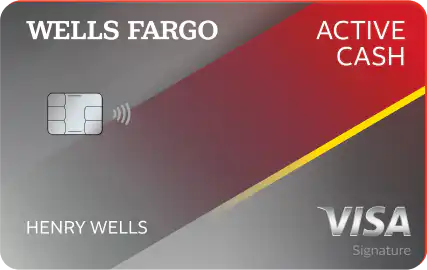
Taxpayers who need time to pay the card off get 0% for 12 months on purchases from account opening, which leaves the processing fee as the only cost of the payment.
- What Sets It Apart: 2% on everything with no annual fee, plus an intro period on purchases and transfers alike; cell phone protection when the card pays your phone bill
- Welcome Offer: $100 bonus once you spend $500 in 3 months
- Rewards: Flat 2% cash rewards
- Features: Visa Signature card; up to $600 per claim in cell phone protection with a $25 deductible; rewards as a card or Wells Fargo account credit, gift cards, or PayPal checkout
- Annual Fee: $0
- Intro APR: 0% interest on purchases and balance transfers for 12 months
- APR: 18.74%, 24.74%, or 28.74% variable after the 0% period
- Cost: 3% balance transfer fee (at least $5) for 120 days, then up to 5%
- Pros: No categories to track; 0% on purchases as well as balance transfers; coverage for every phone line on the bill; rewards don’t expire while the account is open
- Cons: 3% foreign transaction fee; less than a category card pays in its bonus categories; balance transfer fee during the 0% period; no coverage for a phone that goes missing
For more information, read our full Wells Fargo Active Cash® Card Review.
Best for hands-off rewards: Synchrony Premier World Mastercard®

Quarterly payers who want the gain without redeeming anything should pick it, since its 2% comes off the card bill on its own after each payment.
- What Sets It Apart: 2% that pays itself out as bill credits within two statements
- Welcome Offer: A $100 statement credit after $1,000 in purchases in your first 60 days, on accounts opened by December 31, 2026
- Rewards: 2% cash back applied to your bill automatically, within two billing periods of each purchase
- Features: World Mastercard; no cap or categories; prequalification before you apply
- Annual Fee: $0
- APR: 20.49%, 27.49%, or 33.24% variable
- Cost: 3% foreign transaction fee
- Pros: One rate everywhere; no redemption step; no annual fee
- Cons: No 0% interest period; no cell phone, purchase, or rental car protection; uncredited cash back lost if you close the account
For more information, read our full Synchrony Premier World Mastercard® Review.
Best for investing rewards: Fidelity® Rewards Visa Signature® Credit Card

The card deposits each tax payment’s 2% into a Fidelity account, so it suits a Fidelity investor who’d rather invest that 2% than spend it.
- What Sets It Apart: 2% paid as a deposit into up to five Fidelity accounts; automatic monthly deposits; no foreign transaction fee
- Rewards: 2 points per $1, worth 1 cent each as a Fidelity deposit
- Features: Up to 10,000 points toward Global Entry or TSA PreCheck every four years; auto rental collision coverage up to $75,000
- Annual Fee: $0
- APR: 16.74% to 26.74% variable
- Pros: Flat 2% with no categories or caps; deposits can go to a family member’s account; points don’t expire while the account is open
- Cons: Other redemptions get a different value; no sign-up bonus; IRA deposits count toward the current year’s contribution limit
For more information, read our full Fidelity® Rewards Visa Signature® Credit Card Review.
Invite only: SoFi Unlimited 2% Credit Card
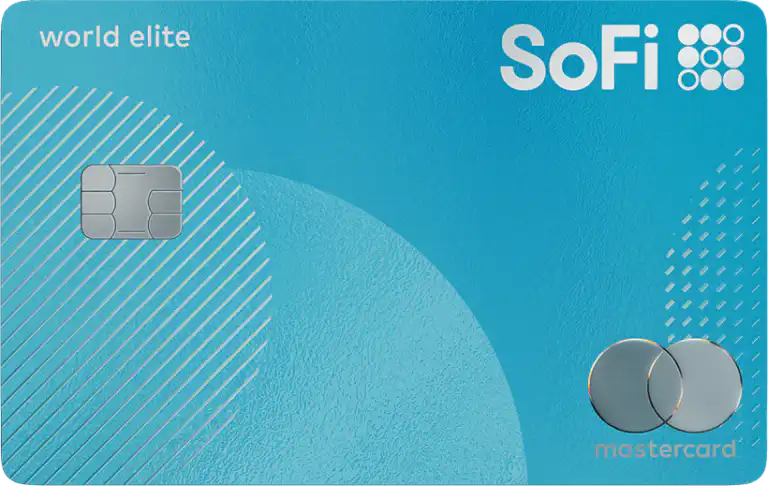
If you already pay $10 a month for SoFi Plus, its 10% boost lifts the card’s 2% to 2.2%, or $220 on a $10,000 payment against Pay1040’s $175 fee.
- What Sets It Apart: Full 2% as a statement credit or toward SoFi accounts and loans; no foreign transaction fee; 2.2% for SoFi Plus members
- Rewards: 3% back on SoFi Travel; 2 points per $1, worth 1 cent each
- Features: Cell phone protection up to $800 per claim and $1,000 a year
- Annual Fee: $0
- APR: 20.24% to 32.99% variable
- Cost: $10 a month for SoFi Plus, which adds the boost
- Credit Needed: Excellent
- Eligibility: By SoFi’s invitation only
- Pros: Same value however you redeem; no caps or redemption minimum; full 2% abroad
- Cons: No welcome bonus or intro APR; a late minimum payment forfeits that cycle’s rewards
For more information, read our full SoFi Unlimited 2% Credit Card Review.
A plain 2% card clears the processing fee by a small margin, so a tax payment pays off through a sign-up bonus or a boosted rate. Open the Capital One Venture before a large payment is due so the payment counts toward its bonus, or choose the Bank of America Premium Rewards instead once you keep $100,000 there.


Subscribe and we'll send you 101 Essential Money Tips to get you started.
The 101 money moves that matter most, from the foundations to protecting what you’ve built.
Editorial Disclosure: The editorial content on this page is not provided, commissioned, reviewed, approved, or otherwise endorsed by any advertiser. Opinions expressed here are ours alone, not those of any advertiser. Compensation does not influence our editorial evaluations, ratings, or opinions.
Advertiser Disclosure: Many or all of the offers that appear on this site are from companies that compensate us, and some companies pay for sponsored content. That compensation may influence which products we cover and where and how they appear on a page, including the order in which they appear. We do not include every company or offer available in the marketplace.